Top 10 Results
 How to Choose Between Private Cloud vs Dedicated Hosting
www.liquidweb.com
Nov 12, 2024 Chika Ibeneme
**Private Cloud Hosting** utilizes virtualization to distribute data across multiple virtual machines, allowing for flexible resource allocation and easier data management. It can be hosted in-house, at a third-party facility, or through a private cloud provider like Liquid Web, which offers features such as VMware vCenter Server for centralized management and vMotion for seamless virtual machine migration.
**Dedicated Hosting**, on the other hand, provides a single-tenant environment where all server resources are dedicated to one client. This option grants complete control over server configuration and customization, making it suitable for businesses with specific performance and security requirements.
When deciding between the two, consider factors like resource flexibility, control, customization, and the specific needs of your organization. The guide provides a comprehensive comparison to assist in making an informed choice.
Private Cloud Hosting vs. Dedicated Hosting
www.redcentricplc.com
Jan 04, 2023 Georgina Evans
**Private Cloud Hosting**: This involves a private server managed by a third-party provider, where resources are dedicated solely to one client (single-tenant). It offers the benefits of a private cloud, such as sole access to resources, while being maintained by the provider. This contrasts with traditional private clouds that are physically located on-site within an organization.
**Dedicated Server Hosting**: A dedicated server is exclusively leased or purchased for a single organization, providing full access to its hardware and customizable resources (RAM, bandwidth, storage). Unlike private clouds, dedicated servers rely on physical hardware specifications and are categorized by a tier system based on redundancy and reliability.
**Key Differences**: The main distinction lies in management and infrastructure. Private cloud hosting is managed by a third party and can be more flexible, while dedicated hosting offers complete control over the hardware but is less adaptable to changes in resource needs.
In summary, choose private cloud hosting for managed services and scalability, while dedicated hosting is ideal for organizations needing full control over their server environment.
How to Choose the Right Solution - Dedicated Cloud vs. ...
www.itprotoday.com
Mar 24, 2025 Christopher Tozzi
A dedicated cloud is a specific type of private cloud where an organization has complete control over its cloud infrastructure, allowing for tailored hardware and software configurations. This can be achieved through self-managed hardware or by utilizing third-party services like bare-metal-as-a-service.
While dedicated clouds offer enhanced control and are ideal for specialized workloads, they often come at a higher cost compared to private clouds. The article also notes that dedicated clouds can serve as a staging ground for connecting to multiple external cloud providers, emphasizing the importance of network performance and integration.
In summary, businesses should consider dedicated clouds for greater customization and control, particularly for demanding applications, while traditional private clouds may still be suitable for less specialized needs.
Dedicated Server vs VPS - Difference Between Hosting ...
aws.amazon.com
Apr 17, 2025
In contrast, a VPS is a cost-effective alternative that partitions a physical server into multiple virtual environments, each with its own dedicated resources. This allows for efficient resource use while maintaining isolation between different VPS instances.
While the page does not directly address private cloud hosting, it is worth noting that private cloud solutions can offer similar benefits to dedicated hosting in terms of control and resource allocation, but typically involve a more flexible and scalable infrastructure. For users considering options between private cloud and dedicated hosting, understanding these distinctions is crucial for making an informed decision based on specific needs and budget.
 Dedicated server vs cloud : r/hetzner
www.reddit.com
Nov 04, 2023
 Is cloud hosting better than a dedicated server?
www.quora.com
Jan 01, 2025
Dedicated servers are physical machines rented for exclusive use, providing complete control over hardware and resources, which is ideal for workloads requiring high performance and specialized hardware. However, they can be more expensive and less flexible compared to cloud solutions.
In contrast, cloud hosting operates on virtual machines (VMs) that share physical resources across multiple users. This model allows for greater scalability, cost-effectiveness, and reliability, as VMs can be easily moved and managed by the provider. However, cloud environments may impose restrictions on resource usage and access to physical hardware, which can affect performance and control.
For private cloud hosting, you gain some benefits of cloud flexibility while maintaining dedicated resources, offering a balance between control and scalability. This can be a suitable option for businesses needing both performance and the advantages of cloud infrastructure.
In summary, if you prioritize control and performance, dedicated hosting may be preferable. If you seek scalability and cost efficiency, especially for variable workloads, a private cloud could be the better choice.
 Cloud Server vs Dedicated Server Comparison
www.rackspace.com
Jan 01, 2025
**Cloud Servers**: These are hosted in a shared, virtualized environment managed by a provider, allowing for flexible resource scaling and cost efficiency. They are ideal for businesses with variable demands, as users only pay for the resources they utilize. Cloud servers can offer performance and security levels similar to dedicated servers but come with the added benefit of shared infrastructure costs.
**Dedicated Servers**: In contrast, dedicated servers are physical machines reserved entirely for one business, providing high levels of data security and consistent performance. They are best suited for organizations with stable, high demands or those requiring extensive IT management capabilities. Dedicated servers allow for full customization but require ongoing maintenance and IT expertise.
**Key Differences**:
- **Environment**: Cloud is multi-tenant (shared), while dedicated is single-tenant (exclusive).
- **Scalability**: Cloud allows for easy scaling and resource management, whereas dedicated servers may involve longer setup times for changes.
- **Cost Structure**: Both can utilize utility-based pricing, but cloud services often provide more cost-effective resource compartmentalization.
For businesses considering private cloud vs. dedicated hosting, the choice largely depends on specific security needs, resource demands, and IT management capabilities. Rackspace offers guidance to help assess these needs and find the right solution.
Colocation vs Dedicated Server Hosting
www.liquidweb.com
Nov 06, 2024 Ronald Caldwell
**Colocation Hosting** allows businesses to lease space in a data center for their own servers, providing control over hardware and costs. Users can select their own hardware and manage it, but they are responsible for maintenance and management, which can be a drawback.
**Dedicated Server Hosting**, on the other hand, offers a single-tenant environment where the provider manages the hardware and software. This option includes support and maintenance, making it easier for businesses that prefer not to handle server management themselves. However, it typically comes with higher long-term costs and less customization flexibility.
For users considering **private cloud vs dedicated hosting**, the article suggests that dedicated hosting provides more control and performance, while private cloud solutions offer scalability and flexibility. Ultimately, the choice depends on specific business needs, including management preferences, budget, and desired level of control over the hosting environment.
Hosted Private Cloud: Comparison & Benefits
us.ovhcloud.com
Jan 01, 2025
The hosted private cloud further simplifies management by having the cloud vendor handle maintenance, upgrades, and security, while still allowing users to add or remove resources as needed. This model combines the benefits of dedicated hosting's control with the scalability and flexibility of cloud solutions, making it a suitable choice for businesses looking for a balance between customization and ease of management.
Cloud Server vs Dedicated Server: What's the Difference?
www.enterprisestorageforum.com
Sep 19, 2023 Avya Chaudhary
**Key Differences:**
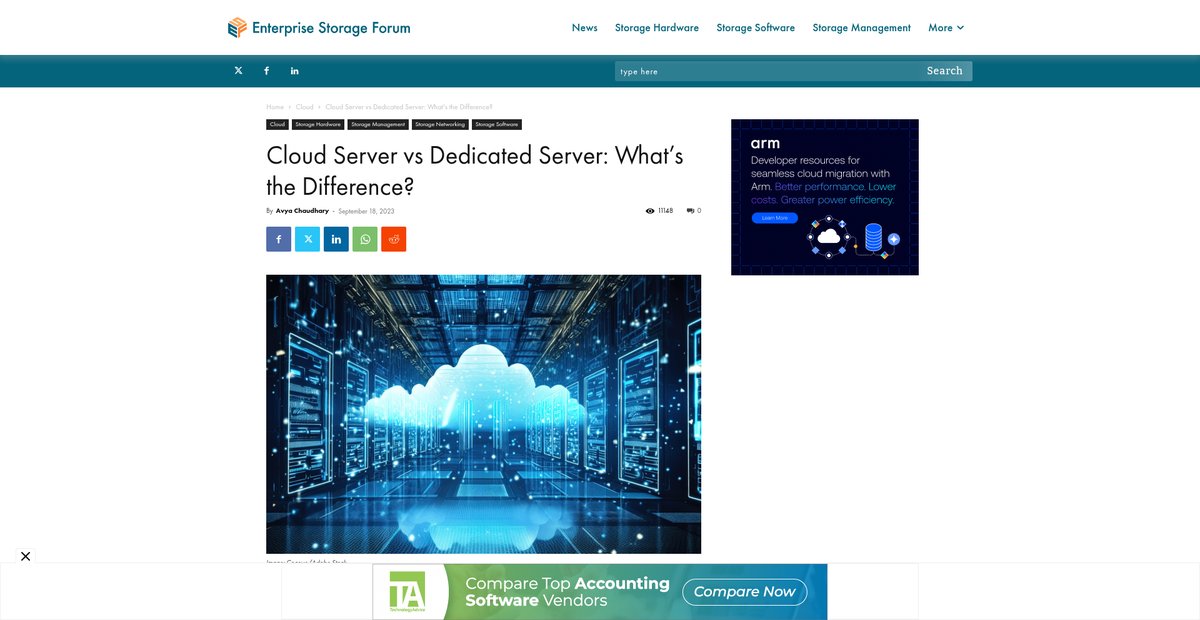
1. **Scalability**: Cloud servers offer flexible scalability, allowing resources to adjust dynamically with traffic demands. In contrast, dedicated servers require manual scaling, often necessitating downtime.
2. **Tenancy**: Cloud servers operate on a multi-tenancy model, sharing resources among multiple users, while dedicated servers provide single tenancy, ensuring consistent performance under load.
3. **Cost Structure**: Cloud servers utilize a pay-as-you-go model with no upfront hardware costs, making them more affordable initially. Dedicated servers involve high initial costs and often require payment for unused resources.
4. **Deployment and Maintenance**: Cloud servers allow for near-instant deployment and are maintained by the provider, whereas dedicated servers require longer setup times and ongoing maintenance by skilled personnel.
5. **Security and Customization**: Dedicated servers offer higher security and privacy, with extensive customization options for hardware components. Cloud servers may compromise on security and have limited customization.
In summary, if you prioritize flexibility, cost-effectiveness, and minimal maintenance, a private cloud solution may be more suitable. However, if security, performance, and customization are your main concerns, dedicated hosting could be the better choice.
Screenshots Gallery