Top 10 Results
 Cloud Server vs Dedicated Server Comparison
www.rackspace.com
Jan 01, 2025
**Cloud Servers**: These are hosted in a shared virtualized environment managed by a provider, allowing for flexible resource scaling based on demand. You only pay for the server space you use, making it cost-effective for businesses with variable workloads. Cloud servers optimize IT performance without the high costs of dedicated infrastructure.
**Dedicated Servers**: These are physical servers exclusively used by your business, ideal for organizations with high data security needs or consistent server capacity demands. While they offer customization and control, they require IT expertise for maintenance and management.
In summary, choose cloud hosting for flexibility and cost-efficiency, especially if your resource needs fluctuate. Opt for dedicated servers if you require high security and consistent performance. For tailored solutions, consider consulting with a provider like Rackspace.
 Cloud vs. Dedicated Servers for Enterprises
www.liquidweb.com
Nov 27, 2024 Jake Fellows
1. **Definition**: Cloud servers are virtual servers that utilize multiple physical machines, offering flexibility and scalability. In contrast, dedicated servers are physical machines leased exclusively to one client.
2. **Cost Structure**: Cloud servers typically operate on a pay-as-you-go model, making them potentially more cost-effective for fluctuating workloads. Dedicated servers usually come with a fixed monthly fee, which can be higher overall.
3. **Performance and Reliability**: Both options can provide reliable performance, but the actual performance will depend on the provider you choose. Cloud servers can offer better redundancy and uptime due to their distributed nature.
4. **Use Cases**: Cloud hosting is ideal for businesses that require scalability and flexibility, while dedicated servers are suited for those needing consistent performance and control over their hardware.
5. **Market Trends**: The private cloud market is rapidly growing, projected to reach $405.3 billion by 2033, while the dedicated server market is also expanding, expected to reach $47.9 billion by 2029.
Ultimately, your choice should align with your specific hosting needs, budget, and the level of control you desire over your server environment. For more detailed insights, refer to the full comparison in the article.
 Comparison Between Cloud and Dedicated Server ...
www.cloudpanel.io
Jan 01, 2025 Shivendra Tiwari Technical Writer
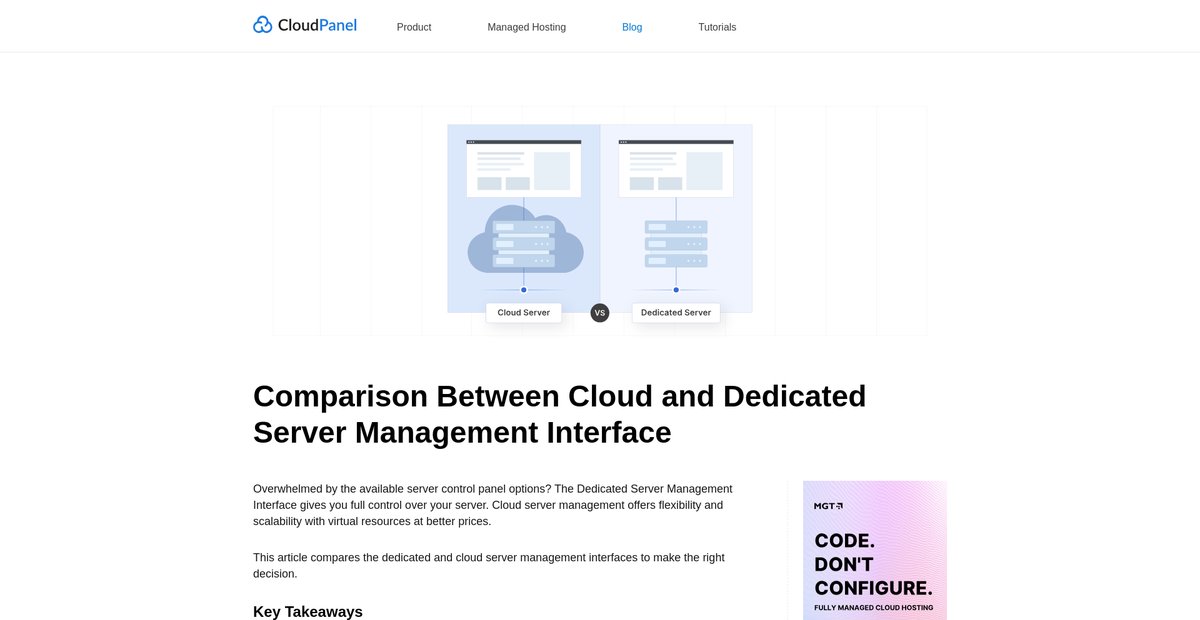
1. **Resource Management**: Cloud servers offer dynamic resource scaling, allowing you to adjust CPU, RAM, and storage based on demand. In contrast, dedicated servers provide exclusive resources, which can lead to better performance for high-demand applications.
2. **Cost Efficiency**: Cloud hosting operates on a pay-as-you-go model, making it more cost-effective for fluctuating workloads. Dedicated servers typically involve higher upfront costs but offer better customization and control over hardware.
3. **Performance and Security**: Dedicated servers generally provide superior performance due to exclusive access to resources and enhanced security through isolation. Cloud servers, while flexible, may have shared resources that can affect performance during peak times.
4. **Deployment and Management**: Cloud servers can be deployed quickly, often within minutes, and offer centralized management through a single dashboard. Dedicated servers may require more time for setup and management.
In summary, choose cloud hosting for flexibility and cost-effectiveness, especially for variable workloads, while dedicated servers are ideal for applications requiring high performance and security.
Dedicated vs. Cloud: How Much Does a Server Cost?
www.atlantech.net
Apr 02, 2024 Tom Collins
Cloud hosting typically offers lower operating expenses and greater flexibility, making it suitable for many use cases. In contrast, dedicated servers may provide better performance for specific workloads but come with higher costs and management complexities. Evaluating the total cost of ownership (TCO) and understanding hidden costs associated with each option is crucial for making an informed decision tailored to your business needs.
Dedicated vs. Cloud: Which Server Infrastructure is Right ...
www.shopify.com
Aug 15, 2024 Rich Moy
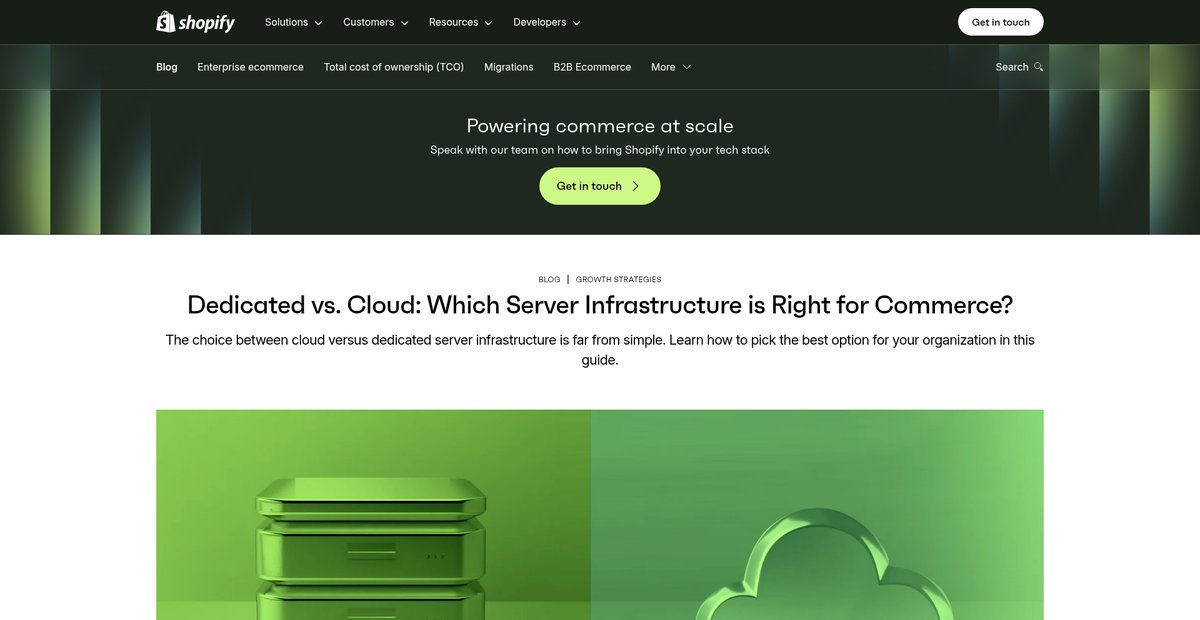
Key considerations include:
1. **Server Speed**: Fast server response times are crucial for e-commerce success, as even minor delays can negatively impact conversion rates and customer experience.
2. **Benefits**: Cloud servers allow businesses to pay for what they use and offload maintenance responsibilities, while dedicated servers offer enhanced performance and security.
3. **Costs**: The article discusses the financial implications of both options, highlighting that cloud solutions can be cost-effective but may lead to higher long-term expenses depending on usage.
Ultimately, the choice between cloud hosting and dedicated servers should be based on specific business needs, including expected traffic, budget, and desired control over infrastructure.
 Dedicated server vs cloud : r/hetzner
www.reddit.com
Nov 04, 2023
 Pros & Cons of Shared, Dedicated, VPS, & Cloud Web ...
www.hostpapa.com
Oct 18, 2023 Julia Keys
**Cloud Hosting**:
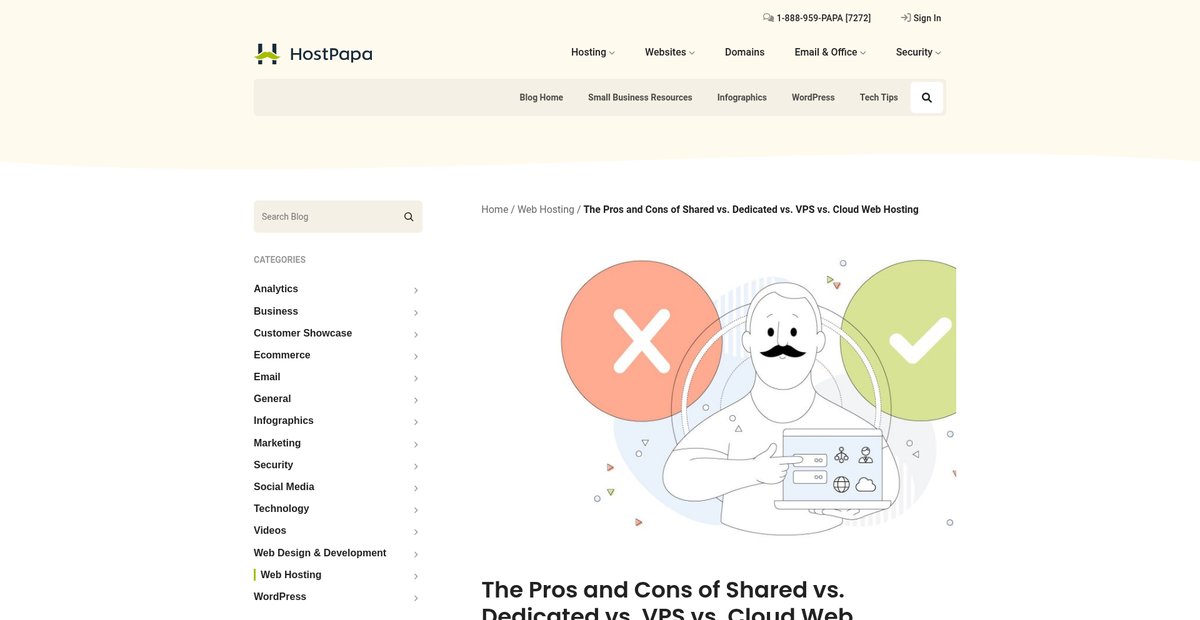
- **Pros**: Offers scalability, allowing you to easily adjust resources based on traffic and demand. It's typically more reliable due to its distributed nature, meaning if one server fails, others can take over. This type of hosting is also cost-effective, as you pay for what you use.
- **Cons**: Potentially higher costs if traffic spikes significantly. Security can be a concern since resources are shared across multiple users, making it crucial to choose a reputable provider.
**Dedicated Servers**:
- **Pros**: Provides complete control over the server, including customization and security. Ideal for high-traffic websites or applications that require consistent performance and resource availability. Dedicated servers typically offer better performance since resources are not shared.
- **Cons**: More expensive than cloud hosting, with costs associated with hardware, maintenance, and management. It also requires technical expertise to manage effectively.
In summary, choose cloud hosting for flexibility and cost-effectiveness, especially if your traffic fluctuates. Opt for a dedicated server if you need maximum performance and control for high-demand applications.
 Pros and Cons of Dedicated Server vs Cloud VPC
xenforo.com
Dec 15, 2023 Korsch Member
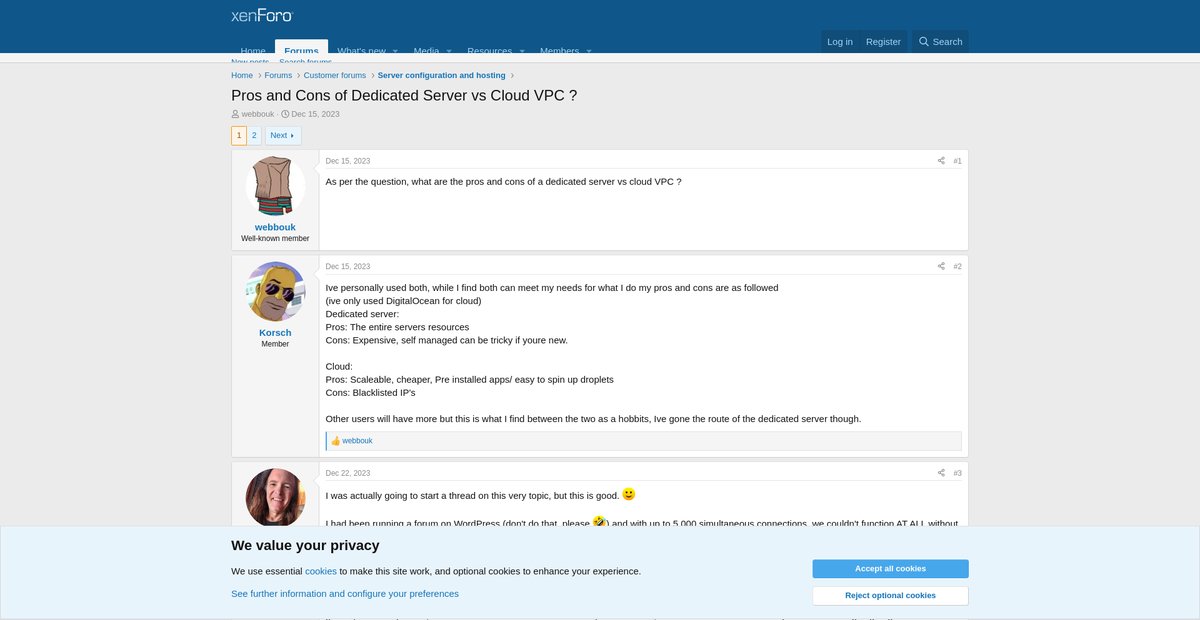
**Dedicated Server:**
- **Pros:**
- Full access to all server resources, which can lead to better performance, especially under high traffic.
- More control over server configurations and management.
- **Cons:**
- Generally more expensive.
- Requires self-management, which can be challenging for those without technical expertise.
**Cloud Hosting (e.g., DigitalOcean):**
- **Pros:**
- Scalable resources that can be adjusted based on demand.
- Typically cheaper and easier to set up with pre-installed applications.
- **Cons:**
- Potential issues with blacklisted IPs, which can affect reliability.
- Some users have reported performance issues under heavy load, suggesting it may not be suitable for all types of high-traffic applications.
In summary, if you require robust performance for high traffic and have the technical skills to manage a server, a dedicated server may be the better choice. Conversely, for flexibility and cost-effectiveness, cloud hosting could be more suitable, but it may struggle with very high traffic scenarios.
 7 Best USA Dedicated Servers in May 2025
hostadvice.com
May 13, 2025
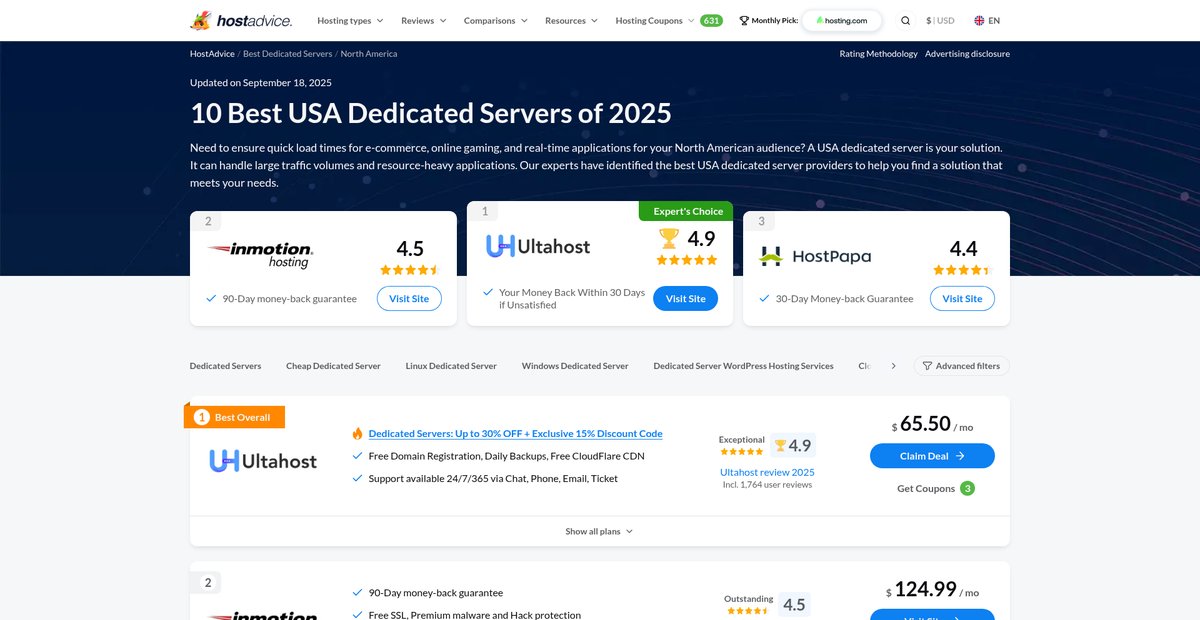
1. **Best Overall**: A dedicated server priced at **$74.80/mo**, offering up to 40% off on web hosting, a 30-day money-back guarantee, free domain registration, daily backups, and 24/7 support. Rated **4.9** with 1,404 user reviews.
2. **Second Option**: Available for **$19.00/mo**, this server features a 30-day free trial with a $100 credit, fast setup, and 24/7 support. It has a rating of **4.8** from 144 user reviews.
3. **Third Choice**: Priced at **$39.50/mo**, it includes a 30-day money-back guarantee, high availability hosting, and 24/7 support. It has a rating of **4.6** based on 198 reviews.
4. **Fourth Server**: This option costs **$99.99/mo** and boasts a perfect rating of **5.0** from 222 reviews. It offers risk-free hosting, free SSL, and advanced backup systems.
5. **Fifth Option**: At **$49.00/mo**,
Dedicated Server vs VPS - Difference Between Hosting ...
aws.amazon.com
Apr 17, 2025
Screenshots Gallery