Top 10 Results
Mail-in-a-Box
mailinabox.email
Jan 04, 2025 Joshua Tauberer
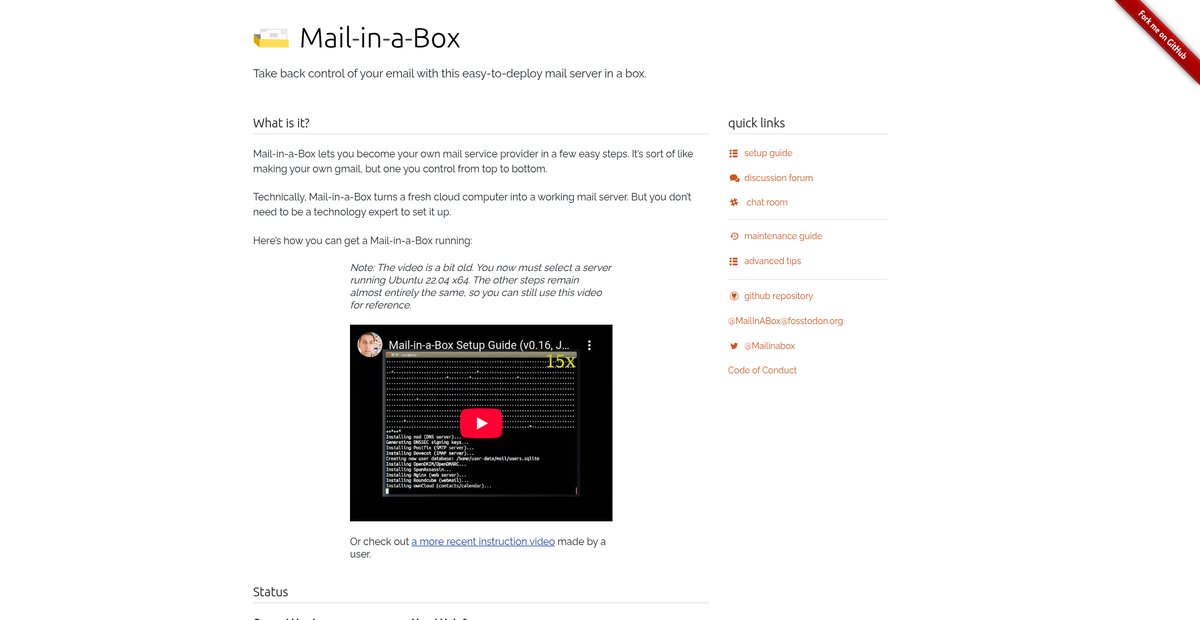
Key features include:
- **Webmail and IMAP/SMTP support** for mobile and desktop clients.
- **Contacts and calendar synchronization**.
- **Spam protection** and mail filtering capabilities.
- **Automatic DNS configuration** for essential email security protocols like SPF, DKIM, and DMARC.
- **TLS certificates** provisioned automatically via Let’s Encrypt.
Mail-in-a-Box also supports multiple users and domain names, and includes a web-based control panel for managing accounts and DNS records. For detailed setup instructions, maintenance, and community support, you can refer to their setup guide and discussion forum.
10 Best Self-Hosted Email Server Platforms to Use in 2025
runcloud.io
Mar 03, 2025 RunCloud Team
**Key Points:**
1. **Definition and Functionality**: Email servers manage the sending, receiving, and storage of emails, operating as digital post offices using protocols like SMTP, IMAP, and POP3.
2. **Pros of Self-Hosting**:
- **Cost Savings**: Particularly beneficial for organizations with many users or high storage needs.
- **Flexibility**: Unlimited email accounts and storage allocation.
- **No Sending Restrictions**: Ideal for businesses with high email volume.
3. **Cons of Self-Hosting**:
- **Email Deliverability Issues**: Risk of emails being marked as spam.
- **Technical Expertise Required**: Ongoing management and updates are necessary, including spam filter maintenance.
4. **Top Self-Hosted Email Solutions**:
- **Mailcow Email Server**: An open-source solution using Docker, known for its user-friendly interface and robust features like spam filtering and security measures.
This guide is particularly useful for those considering hosting their own email server, offering insights into both the benefits and challenges, as well as practical options to explore.
 Self Hosted E-mail server
forum.level1techs.com
Mar 05, 2024
 Setting up a Mail Server with Mailcow and Amazon SES (DigitalOcean Guide)
blog.alisaleem252.com
May 15, 2025 Ali Saleem
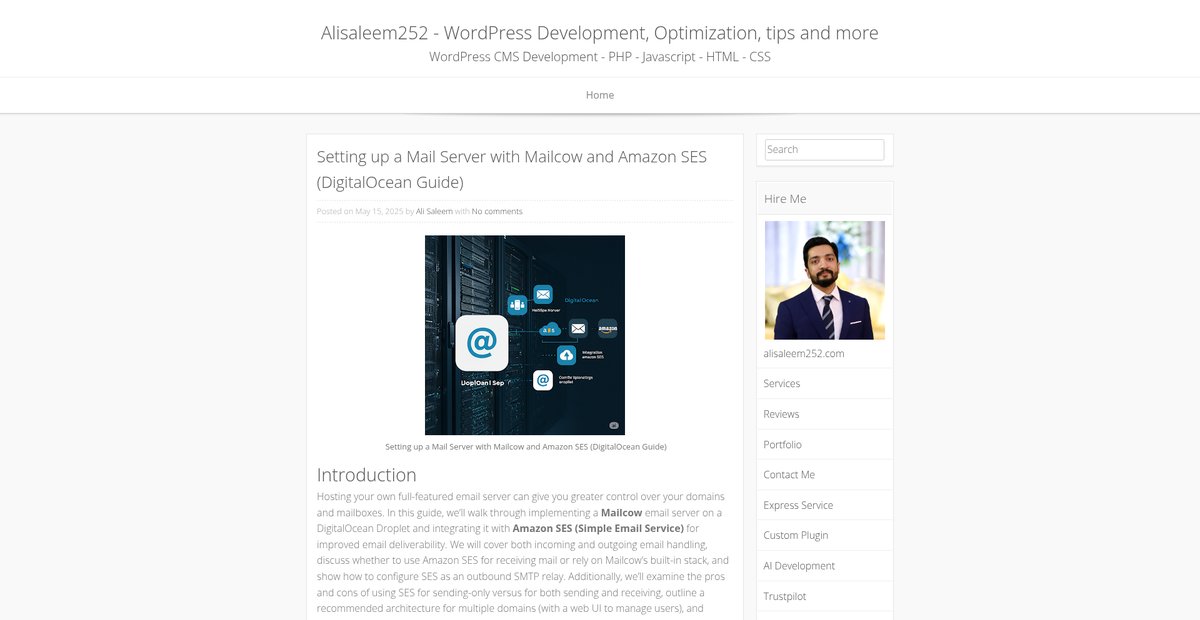
Key points include:
1. **Mail Receiving**: The guide recommends using Mailcow's built-in receiving capabilities for incoming emails instead of Amazon SES. Mailcow provides a complete solution for storing emails in user mailboxes, while SES is not designed for traditional mailbox access and can incur additional costs for incoming emails.
2. **Mail Sending**: Amazon SES is suggested as an outbound SMTP relay for sending emails from Mailcow. This setup allows you to leverage SES's reliability and deliverability features while managing incoming mail directly through Mailcow.
3. **Best Practices**: The guide covers essential security measures (SPF, DKIM, DMARC) and scalability considerations, ensuring a robust email server setup.
Overall, the guide provides a comprehensive framework for hosting your own email server, focusing on using Mailcow for receiving and Amazon SES for sending emails.
 How to Setup Secure Email Server
dev.to
Sep 20, 2025 Firat
Key steps include:
1. **Server Preparation**: Choose a VPS provider (like DigitalOcean) that allows port 25 for email sending. Create a droplet with Ubuntu 22.04 and add your SSH key for secure access.
2. **DNS Configuration**: Set up glue records for your domain through your domain registrar (recommended: Porkbun). Create two glue records pointing to your server's IP and configure your domain's nameservers accordingly.
This setup allows you to manage your own email with features like webmail, calendar, and spam filtering, all while ensuring security and control over your email communications.
Postfix : Install : Server World
www.server-world.info
May 09, 2025
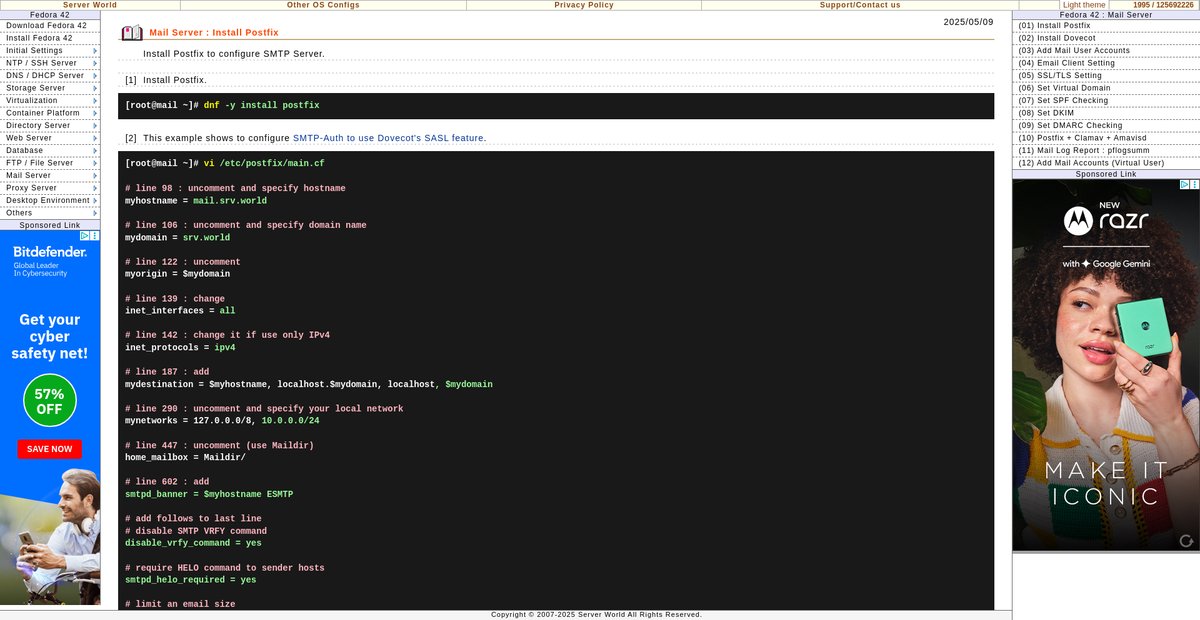
1. **Install Postfix**: Use the command `dnf -y install postfix` to install the Postfix mail server.
2. **Configure Postfix**: Edit the configuration file located at `/etc/postfix/main.cf`. Key settings to modify include:
- Set your hostname: `myhostname = mail.srv.world`
- Define your domain: `mydomain = srv.world`
- Specify local networks: `mynetworks = 127.0.0.0/8, 10.0.0.0/24`
- Enable Maildir format: `home_mailbox = Maildir/`
- Configure SMTP authentication and restrictions.
3. **Adjust Firewall Settings**: If Firewalld is active, allow SMTP traffic with the commands:
- `firewall-cmd --add-service=smtp`
- `firewall-cmd --runtime-to-permanent`
This setup will enable you to run your own email server using Postfix, allowing for SMTP email handling. For detailed configuration options, refer to the Postfix documentation or the provided webpage.
 Postfix on Kubernetes: A Step-by-Step Email Guide
blog.risingstack.com
Sep 25, 2025 RisingStack Engineering
Key points include:
1. **Kubernetes Setup**: You need a Kubernetes cluster with a fixed outbound IP address and your own domain to host the email server.
2. **Email Authentication**: To avoid issues with email delivery, you must configure:
- **PTR Record**: For reverse DNS checks to validate the sending IP.
- **SPF Record**: To specify which servers are authorized to send emails on behalf of your domain.
- **DKIM**: To add a digital signature to your emails, ensuring their authenticity.
- **DMARC**: To provide instructions to email providers on how to handle emails that fail SPF or DKIM checks.
This guide is particularly useful for those looking to host their own email server to gain more control over email delivery and avoid the limitations of third-party services.
 Why Run Your Own Mail Server? Pros, Cons, and Alternatives - DoHost
dohost.us
Jul 27, 2025 dohost.us
However, there are notable challenges to consider. Setting up and maintaining a mail server requires substantial technical expertise in networking and security. Regular maintenance is time-consuming, and security risks are high, as mail servers are often targeted by hackers. Deliverability issues can arise, affecting whether your emails reach recipients, and the initial investment in hardware and software can be significant.
Alternatives to self-hosting include using managed email hosting providers, which can alleviate many of the burdens associated with running your own server. This guide helps weigh the pros and cons to determine if hosting your own email server is the right choice for you.
 Blog | Daniel Miessler
danielmiessler.com
Aug 25, 2025

How to set up a private email server
proton.me
Jan 18, 2024
Screenshots Gallery