Top 10 Results
What is VPS (virtual private server) hosting?
www.hostinger.com
Aug 03, 2018 Domantas G.
Key features of VPS hosting include:
- **Dedicated Resources**: Each user has their own allocation of CPU, RAM, storage, and bandwidth.
- **Isolated Environment**: VPS instances run independently, preventing resource contention among users.
- **Administrative Control**: Users have root access, enabling them to install software and configure settings as needed.
- **Self-Managed**: Users are responsible for managing their server, which requires some technical expertise.
VPS hosting is ideal for various applications, including automation platforms, game servers, and custom development frameworks, making it a flexible and cost-effective solution for users needing more control and performance than shared hosting.
What Is a Virtual Private Server (VPS)?
cloud.google.com
Apr 25, 2025
In contrast to shared hosting, where resources are not guaranteed, a VPS ensures that your allocated resources are reserved solely for your use. This setup simulates a dedicated server environment, as each VPS can run its own operating system and software independently.
VPS hosting is positioned between shared and dedicated hosting: while shared hosting lacks resource allocation, dedicated hosting offers an entire physical server for one user, which can be costly. A VPS provides a more affordable option with many benefits of dedicated hosting, such as root access and the ability to customize server applications.
For those interested in trying VPS hosting, Google Cloud offers $300 in free credits for new customers.
What Is a Virtual Private Server (VPS)?
www.ibm.com
Sep 17, 2021 IBM
Unlike shared hosting, where resources are equally divided among users, a VPS allocates specific resources to each instance, ensuring isolation and dedicated performance. Major cloud providers like Google Cloud, AWS, Microsoft Azure, and IBM Cloud offer VPS solutions that are more robust and scalable than traditional hosting, supporting diverse workloads and reducing hardware costs.
The global VPS market is projected to grow significantly, indicating its increasing relevance in modern cloud computing and server hosting.
What Is VPS? A Beginner's Guide to Virtual Private Servers
www.dreamhost.com
Nov 06, 2023 Dan Kuciel
Key features of VPS hosting include:
- **Isolation**: Each VPS has its own dedicated CPU, RAM, and storage, allowing for consistent performance regardless of other users' activities.
- **Customization**: Users can install their preferred operating systems and software, enabling tailored configurations for specific needs.
- **Cost-Effectiveness**: VPS hosting offers many benefits of dedicated servers at a lower price, making it suitable for small businesses and growing websites.
In summary, VPS hosting provides a balance of affordability, performance, and control, making it an ideal choice for users seeking more than what shared hosting can offer.
What Is a VPS, and Does It Fit Your Hosting Needs?
www.siteground.com
Dec 04, 2024 Magda-Lina Uzunova
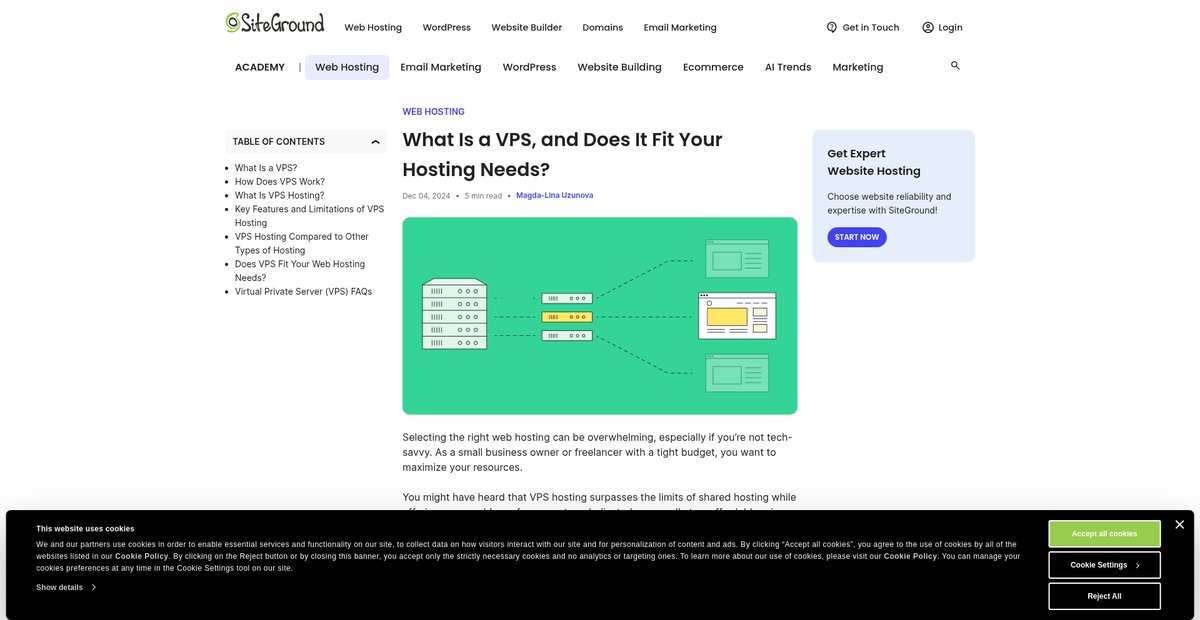
What is a virtual private server (VPS)?
www.ionos.com
Feb 23, 2023
### Key Features of VPS Hosting:
- **Independence**: Each VPS operates in isolation, ensuring that issues in one virtual server do not affect others.
- **Guaranteed Performance**: Users receive a predefined share of hardware resources, ensuring a minimum level of performance.
- **Security**: Each VPS has its own operating system, which enhances security by isolating configurations and potential cyberattacks.
### Advantages:
- Cost-effective compared to dedicated servers.
- Less administrative effort for providers.
- Flexibility in resource allocation during idle times.
### Disadvantages:
- More complex management due to full root access.
- Limited access to physical hardware resources compared to dedicated servers.
- Shared network resources can lead to limitations.
VPS hosting is ideal for users who need more control and resources than shared hosting can provide, without the higher costs associated with dedicated servers.
Virtual private server
en.wikipedia.org
Apr 30, 2025 Contributors to Wikimedia projects
ELI5: Why would I use a VPS server? : r/explainlikeimfive
www.reddit.com
Jul 16, 2014 Anyankathebat
VPS hosting operates like a virtual machine, running its own operating system, and allows for greater customization and installation of software compared to shared hosting. It is ideal for users who need more control, flexibility, and scalability as their website grows. Users can easily upgrade their VPS without the need for migration, making it a practical choice for growing businesses or applications that require specific configurations and resources.
The Pros And Cons Of VPS Web Hosting
www.webhostinghub.com
Jan 01, 2025
**Key Features of VPS Hosting:**
- **Cost-Effective:** VPS hosting is generally less expensive than dedicated hosting while providing similar benefits.
- **Customization:** Users can tailor their VPS plans to meet specific needs, avoiding unnecessary features.
- **Scalability:** VPS plans can be easily scaled up as a website grows, allowing users to start with minimal resources and expand as needed.
- **Control:** Users typically have root access, enabling them to run custom scripts and manage their server environment more freely than in shared hosting.
- **Support Options:** VPS hosting often includes technical support similar to shared hosting, with options for semi-managed or fully managed services.
**Considerations:**
While VPS hosting offers many advantages, it is more costly than shared hosting, which may not be suitable for all users, especially those with minimal resource needs.
What is VPS? - Virtual Private Server Explained
aws.amazon.com
Mar 11, 2025
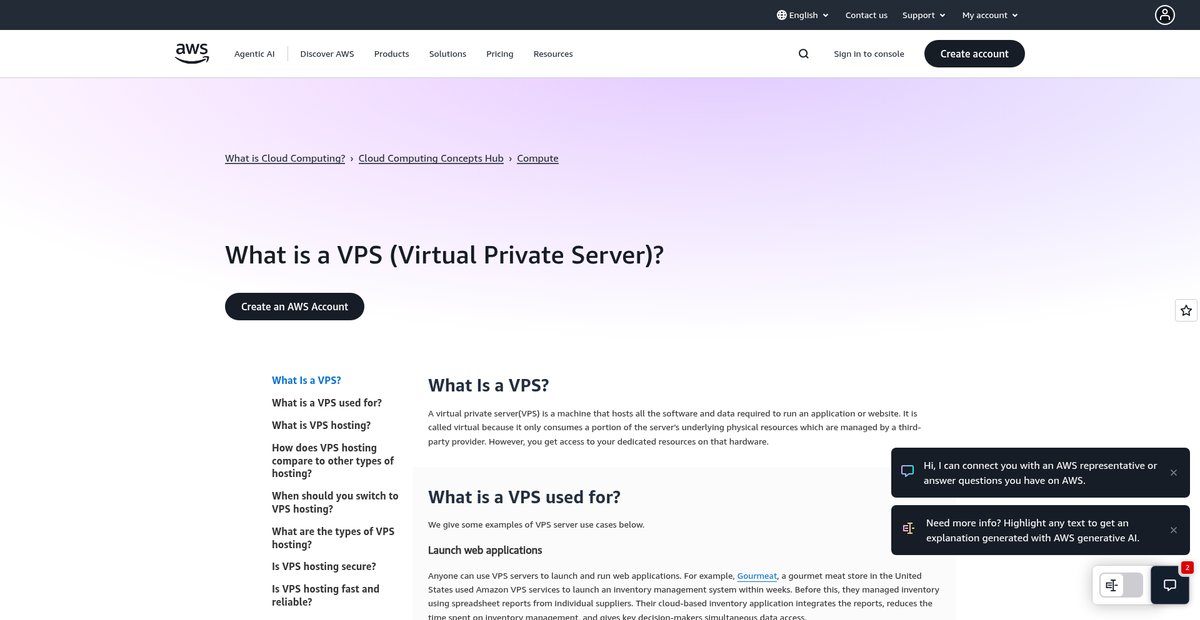
With VPS hosting, users receive a virtual machine that is pre-configured with dedicated resources, enabling them to deploy and manage their applications efficiently. This setup offers a balance of performance, security, and cost-effectiveness, making it a popular choice for those needing more control than shared hosting but without the expense of dedicated servers.
For more detailed information, you can visit the full article on AWS: What is VPS?.
Screenshots Gallery