Top 10 Results
Shared Hosting vs. Dedicated Hosting: Which is Right for ...
www.cloudpanel.io
Jan 01, 2025 Nikita S. Technical Writer
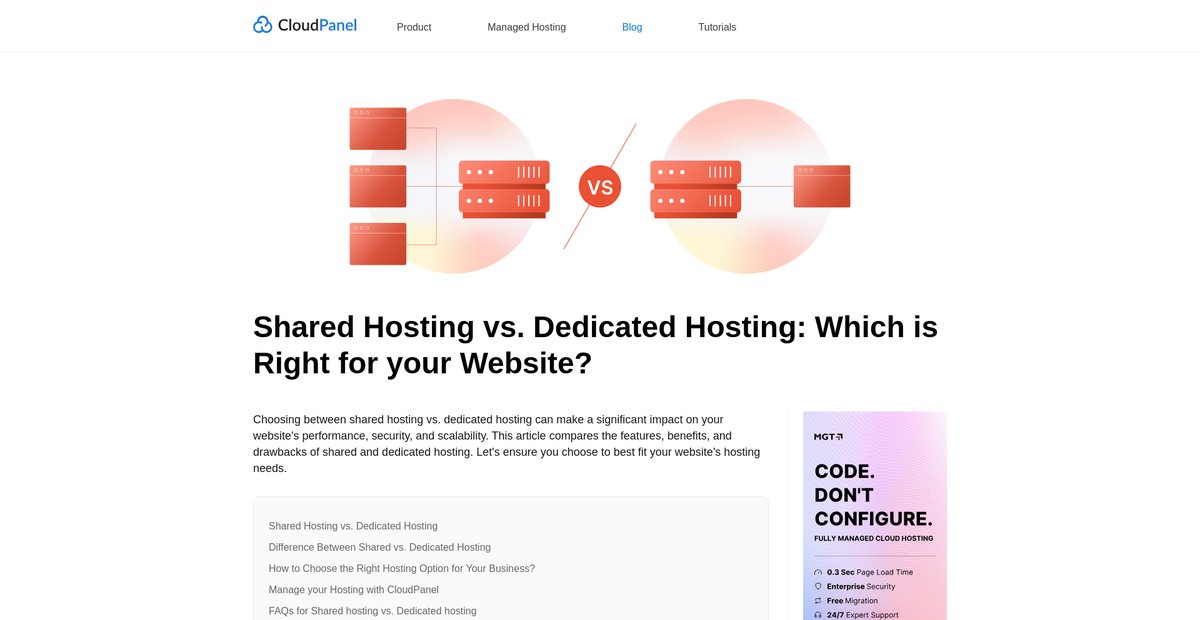
**Shared Hosting**:
- **Definition**: Multiple websites share a single server's resources, making it a cost-effective choice for small businesses and personal sites.
- **Pros**:
- **Affordability**: Generally the cheapest option available.
- **User-Friendly**: Often includes easy-to-use control panels and managed services for backups and security.
- **Support**: Many providers offer strong customer support.
- **Cons**:
- **Limited Resources**: Performance can suffer during peak usage due to shared resources.
- **Less Control**: Users have limited access to server settings and software installations.
- **Scalability Issues**: May not accommodate rapidly growing websites effectively.
**Dedicated Hosting**:
- **Definition**: A single server is dedicated to one website, providing full control and resources.
- **Pros**:
- **Performance**: Better speed and reliability, especially for high-traffic sites.
- **Security**: Enhanced security features since resources are not shared with other websites.
- **Control**: Users have complete control over server settings and configurations.
- **Cons**:
- **Cost**: More expensive than shared hosting.
- **Technical Knowledge Required**: Managing a dedicated server often requires higher technical expertise.
**Conclusion**: The choice between shared and dedicated hosting depends on your website's budget, traffic
Understanding Shared vs. Dedicated Hosting
pressable.com
Dec 14, 2023 Alfred Bassetti
**Shared Hosting**: This is a cost-effective option where multiple websites share a single server's resources, similar to renting an apartment in a large building. It's ideal for beginners and small businesses due to its affordability. However, it comes with challenges such as potential performance issues when other sites on the server experience high traffic, security vulnerabilities from sharing a server, and limited scalability as your website grows.
**Dedicated Hosting**: In contrast, dedicated hosting provides an entire server exclusively for one website, akin to renting a whole house. This option is designed for high-traffic websites and offers superior performance, customization, and security. While it is more expensive, it is better suited for larger businesses with complex needs.
In summary, choose shared hosting for budget-friendly, entry-level needs, and dedicated hosting for high performance and security for larger, more demanding websites.
Shared Hosting vs. Dedicated Hosting – Which Is the Best Option?
phoenixnap.com
Oct 18, 2023 Anastazija Spasojevic
**Shared Hosting**: This option involves multiple websites sharing the resources of a single server, making it an economical choice ideal for small businesses and beginners. It is user-friendly and requires minimal technical expertise, as the costs and maintenance are distributed among users. However, performance can be inconsistent, especially during traffic spikes, since resources are shared.
**Dedicated Hosting**: In contrast, dedicated hosting provides exclusive use of an entire server for a single website. This option is best suited for enterprises or high-traffic sites that require reliable performance, enhanced security, and greater control over their hosting environment. While it offers superior stability and customization, it comes with a higher cost and demands more technical knowledge.
When choosing between the two, consider your website's traffic, budget, and technical capabilities to determine the best fit for your needs.
Shared Hosting vs Dedicated Hosting: The Pros & Cons
contabo.com
Mar 02, 2024 Tobias Mildenberger
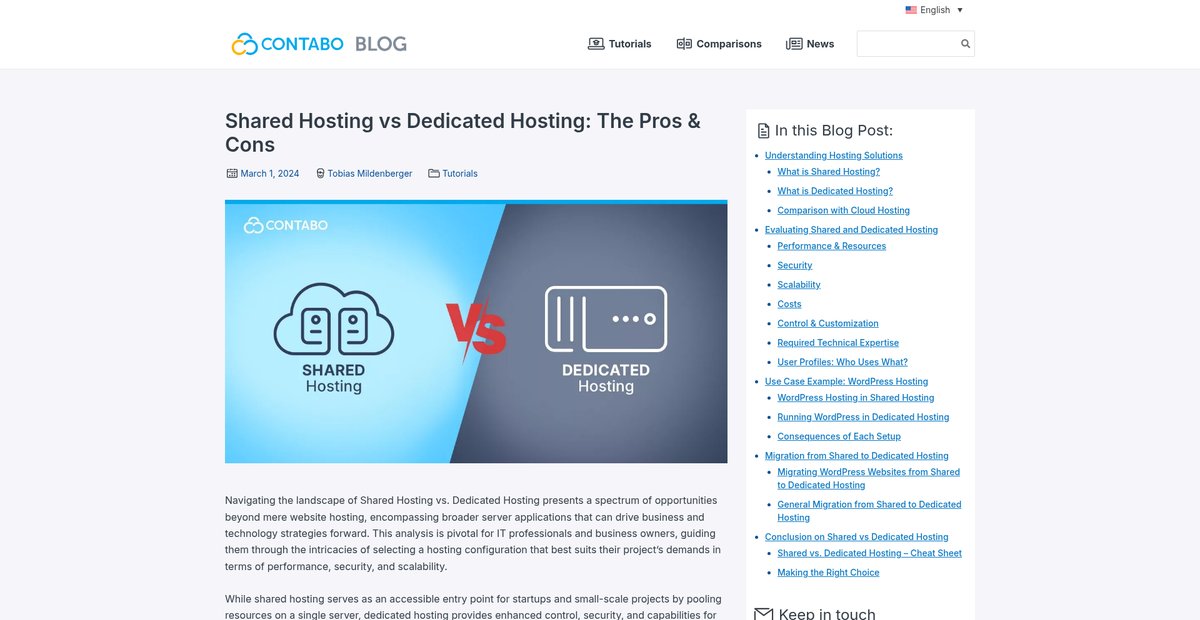
**Shared Hosting** is a cost-effective option where multiple websites share the resources of a single server. This makes it ideal for small businesses, blogs, and personal sites, but it can lead to reduced performance during peak traffic times due to resource sharing. It is an accessible entry point for those new to online hosting.
**Dedicated Hosting**, on the other hand, provides exclusive access to a server's resources, making it suitable for high-traffic websites and applications with demanding performance and security requirements. Users have full control over the server, including hardware and software configurations, but this comes at a higher cost.
Additionally, **Cloud Hosting** combines elements of both shared and dedicated hosting, offering scalability and flexibility by utilizing resources from multiple servers. This model allows for easy adjustments based on demand and can be more cost-efficient for varying traffic levels.
In summary, choose shared hosting for budget-friendly, low-traffic sites, and dedicated hosting for high-performance needs. Cloud hosting serves as a flexible alternative that balances both approaches.
 What is the difference between Shared Hosting and ...
www.namecheap.com
Dec 24, 2024
Key Differences Between Shared Hosting and Dedicated Hosting
www.gigenet.com
Jun 01, 2018 Staff
**Shared Hosting**:
- Multiple websites share the same server resources, leading to limited disk space and bandwidth.
- More affordable, making it suitable for small businesses or those just starting online.
- Requires minimal technical skills, as the hosting provider manages maintenance and security.
- Potential penalties for exceeding resource limits, which can restrict website performance.
**Dedicated Hosting**:
- Your website is the only one hosted on the server, providing exclusive access to all resources.
- More expensive but offers greater operational flexibility, allowing for customization and better handling of traffic spikes.
- Requires technical expertise for setup and management, though fully managed options are available at a higher cost.
- Enhanced security, as you have control over server configurations and security measures.
In summary, choose shared hosting for cost-effectiveness and ease of use, and opt for dedicated hosting for better performance, security, and customization capabilities.
 Shared Hosting VS Dedicated Hosting: Everything You Need to Know
www.hostpapa.com
Apr 14, 2022 Julia Keys
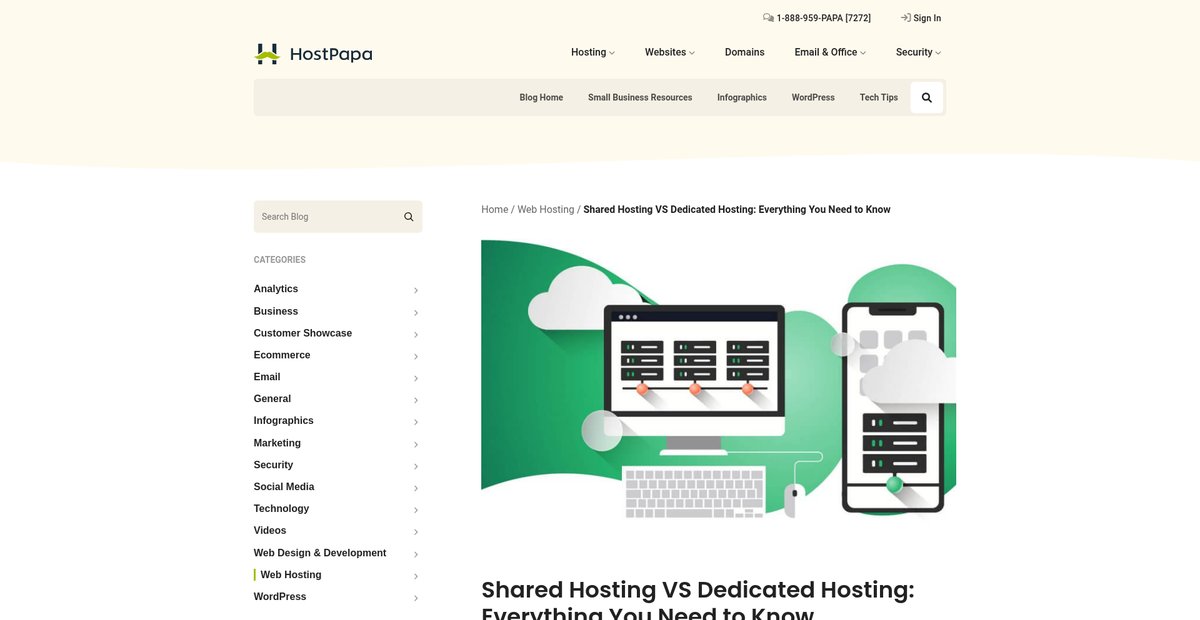
**Shared Hosting** involves multiple websites sharing the same server resources. This option is cost-effective, making it ideal for small websites or those just starting out. However, it comes with limitations, such as reduced performance and security risks due to neighboring sites potentially affecting your website's speed and stability.
**Dedicated Hosting**, on the other hand, provides an entire server exclusively for one website. This option offers enhanced performance, security, and control, making it suitable for larger websites or those with high traffic demands. However, it is significantly more expensive than shared hosting.
In summary, shared hosting is budget-friendly and suitable for smaller sites, while dedicated hosting offers superior performance and security for larger, more resource-intensive websites. The choice between the two depends on your specific needs and budget.
 Difference between Shared Hosting and Dedicated Hosting
www.geeksforgeeks.org
Aug 20, 2020 GeeksforGeeks
**Shared Hosting**:
- **Definition**: In shared hosting, multiple websites share the same server resources (CPU, memory, etc.).
- **Pros**:
- **Cost-effective**: Lower initial costs, making it ideal for beginners or small websites.
- **Ease of use**: Generally user-friendly, suitable for low-traffic sites.
- **Cons**:
- **Limited resources**: Performance can suffer due to resource sharing.
- **Lower bandwidth**: Not suitable for high-traffic websites.
**Dedicated Hosting**:
- **Definition**: Dedicated hosting provides an entire server exclusively for one website, offering full control over resources.
- **Pros**:
- **High performance**: Better speed and reliability, ideal for large or high-traffic sites.
- **Enhanced security**: More secure since resources are not shared with others.
- **Cons**:
- **Higher cost**: More expensive than shared hosting, requiring a larger budget.
- **Management responsibility**: Users must manage server maintenance and security.
In summary, choose shared hosting for budget-friendly, low-traffic sites, and opt for dedicated hosting for high-performance needs and greater control.
Hosting differences: Understanding shared, VPS, and ...
www.godaddy.com
Feb 28, 2025 Tom Rankin
**Shared Hosting**: In shared hosting, multiple websites are hosted on a single server, sharing its resources such as CPU, memory, and storage. This option is cost-effective and ideal for small businesses or personal websites with low to moderate traffic. However, because resources are shared, performance can be affected by other sites on the same server, and security may be a concern.
**Dedicated Hosting**: In contrast, dedicated hosting provides an entire server exclusively for one website. This option offers greater control, performance, and security, making it suitable for larger businesses or websites with high traffic volumes. Users have full access to server resources, allowing for customization and enhanced security measures.
In summary, shared hosting is budget-friendly and suitable for smaller sites, while dedicated hosting is more powerful and secure, catering to larger, resource-intensive websites.
Shared Environment vs. Dedicated Environment
www.hostgator.com
Jan 01, 2025
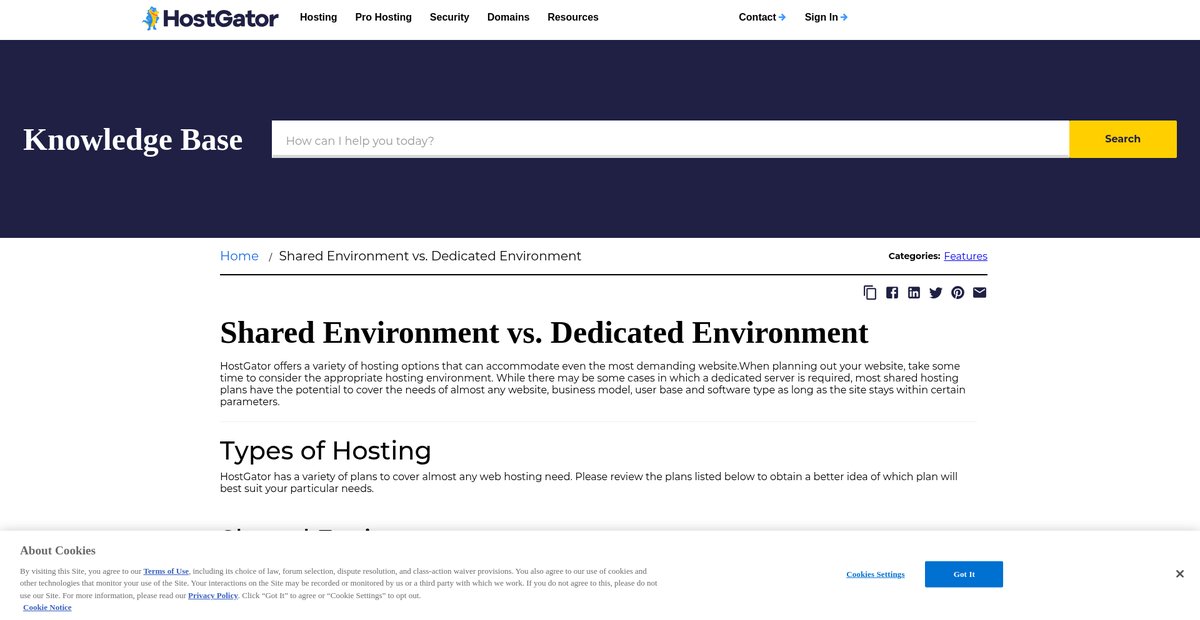
**Shared Hosting**:
- In a shared environment, multiple websites share the same server resources. This is cost-effective and suitable for smaller websites or businesses with moderate traffic.
- HostGator offers various shared hosting options, including Linux Shared, Windows Shared, and Reseller Hosting. While shared hosting can accommodate basic website needs, it comes with limitations on resources such as bandwidth, processes, and SQL connections to ensure fair usage among all users.
**Dedicated Hosting**:
- Dedicated hosting provides users with full control over an entire server and its resources. This option is ideal for larger websites or applications that require significant processing power and bandwidth.
- With dedicated hosting, there are minimal restrictions on CPU usage and processes, making it suitable for high-traffic sites or those needing specialized configurations.
In summary, shared hosting is more affordable and suitable for smaller sites, while dedicated hosting offers greater control and resources for larger, more demanding websites.
Screenshots Gallery