Dedicated Servers

What Is Dedicated Web Hosting

Discover the top 10 providers for what is dedicated web hosting. Compare features, pricing, and reviews to find the perfect solution.

Top 10 Results

1

What is Dedicated Hosting & Why use It

www.rackspace.com

Jan 01, 2025
What is Dedicated Hosting & Why use It Screenshot
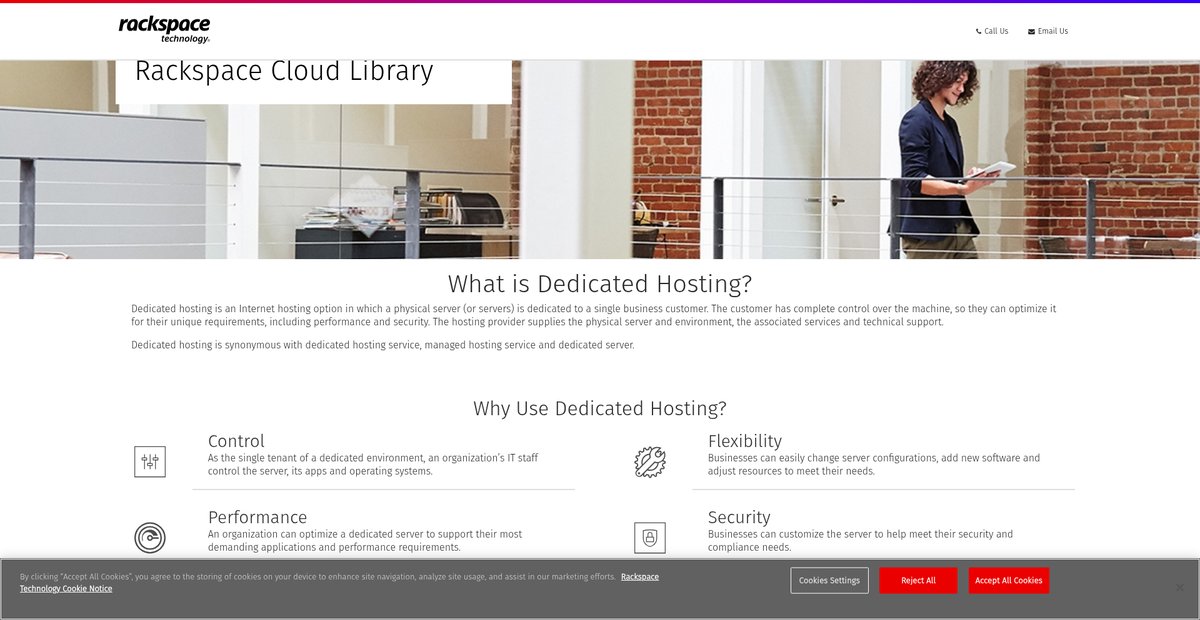
Dedicated web hosting is a hosting solution where a single physical server is exclusively allocated to one business customer, providing them complete control over the server's configuration, applications, and operating systems. This type of hosting offers several advantages, including:

1. **Control**: Organizations have full authority over their server environment, allowing for tailored configurations.
2. **Flexibility**: Businesses can easily modify server settings, install new software, and adjust resources as needed.
3. **Performance**: Dedicated servers can be optimized for high-demand applications, ensuring better performance.
4. **Security**: Companies can customize security measures to meet specific compliance and security requirements.

Rackspace offers fully-managed dedicated hosting services, providing 24/7 expert support and options for integrating with cloud services like AWS and Microsoft Azure. They also support virtual environments and dedicated databases, making them a comprehensive solution for businesses seeking dedicated hosting.
2

Dedicated hosting - what is it? | Glossary

www.getresponse.com

Jan 01, 2025 GetResponse
Dedicated hosting - what is it? | Glossary Screenshot
Dedicated web hosting is a service where an entire physical server is allocated exclusively to a single user or organization. This setup provides full control over the server's resources, configuration, and security, unlike shared hosting where multiple websites share server resources. Key benefits of dedicated hosting include improved performance, enhanced security, and the ability to handle high traffic volumes and resource-intensive applications. Clients can customize their server settings and implement their own security measures, ensuring better protection for their websites. Additionally, dedicated hosting offers scalability, allowing users to adjust server resources as needed.
3

What is a Dedicated Server? Definition, Benefits, and Use Cases

www.liquidweb.com

Apr 05, 2025
What is a Dedicated Server? Definition, Benefits, and Use Cases Screenshot
A dedicated server is a type of web hosting where a physical server is exclusively allocated to a single user or organization, providing complete access to its resources such as processing power, memory, and storage. This setup ensures optimal performance, security, and control, making it ideal for businesses with high demands or resource-intensive applications.

Key benefits of dedicated hosting include:

- **Unmatched Performance**: All resources are reserved for one client, ensuring smooth operation even during high traffic.
- **Complete Customization**: Users can tailor the server environment, including the operating system and hardware specifications, to meet specific needs.
- **Enhanced Security**: With no shared resources, the risk of security breaches is significantly reduced, allowing for tailored security configurations.

Dedicated servers are suitable for various use cases, including application hosting and media streaming. For more details, you can explore options and configurations for dedicated servers at Liquid Web.
4

What is a Dedicated Server? - Dedicated Server Hosting Explained - AWS

aws.amazon.com

Apr 17, 2025
What is a Dedicated Server? - Dedicated Server Hosting Explained - AWS Screenshot
A dedicated server is a type of web hosting where a physical server is exclusively assigned to a single organization, providing complete control over its resources. This setup is ideal for hosting applications and websites that require high performance, security, and customization. Unlike shared hosting, where resources are divided among multiple users, dedicated hosting ensures that all server resources—such as CPU, RAM, and storage—are available solely for your use.

Key benefits of dedicated hosting include:

1. **High Performance**: Dedicated servers offer maximum performance for resource-intensive applications, as there is no competition for hardware resources.

2. **Configuration Control**: Users can customize server settings extensively, including resource allocation and security configurations, allowing for optimization tailored to specific needs.

3. **Enhanced Security**: With fewer entry points and complete control over security measures, dedicated servers provide a secure environment suitable for industries with strict compliance requirements.

Common use cases for dedicated servers include high-performance computing tasks, running applications, DevOps, and content management. This makes dedicated hosting a suitable choice for organizations with demanding workloads and specific security needs.
5

What is Dedicated Hosting?

www.wpbeginner.com

Apr 12, 2013 Syed Balkhi
What is Dedicated Hosting? Screenshot
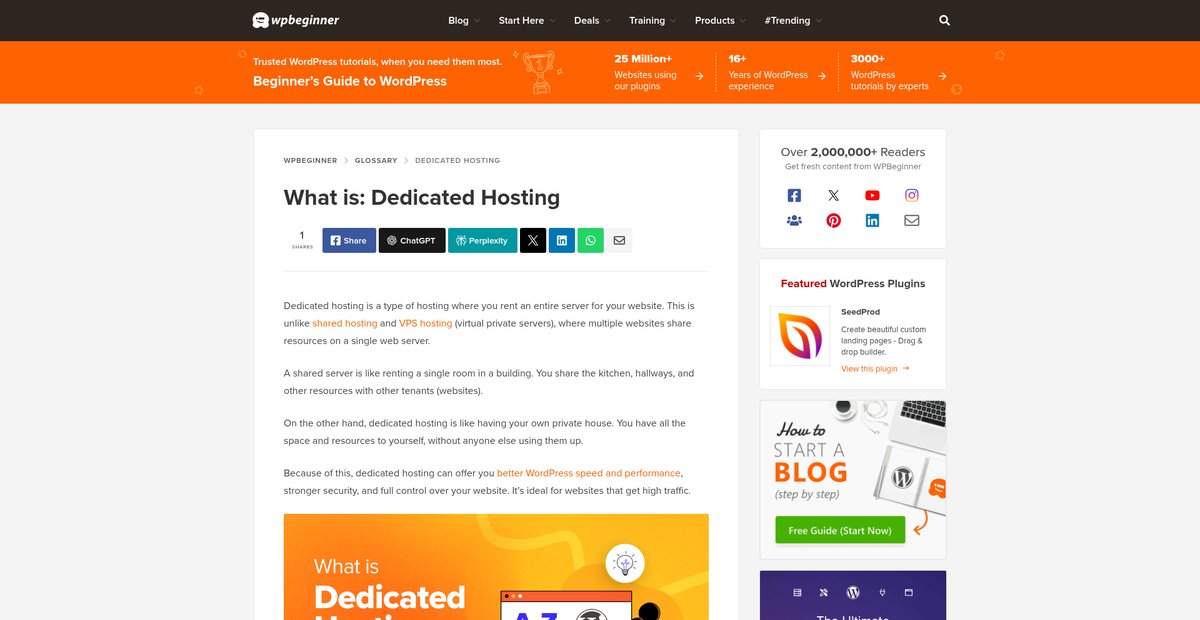
Dedicated web hosting is a type of hosting service where you rent an entire server exclusively for your website, unlike shared or VPS hosting where resources are shared among multiple sites. This arrangement provides better performance, increased security, and full control over server configurations, making it ideal for high-traffic websites. With dedicated hosting, you have access to all server resources, including CPU, RAM, and bandwidth, which can lead to faster loading times and improved uptime. Essentially, it's like having your own private server, allowing for tailored setups and enhanced reliability. For more details, visit WPBeginner's guide on dedicated hosting.
6

What is Dedicated Server Hosting? | AccuWeb Hosting

www.accuwebhosting.com

Mar 19, 2025
What is Dedicated Server Hosting? | AccuWeb Hosting Screenshot
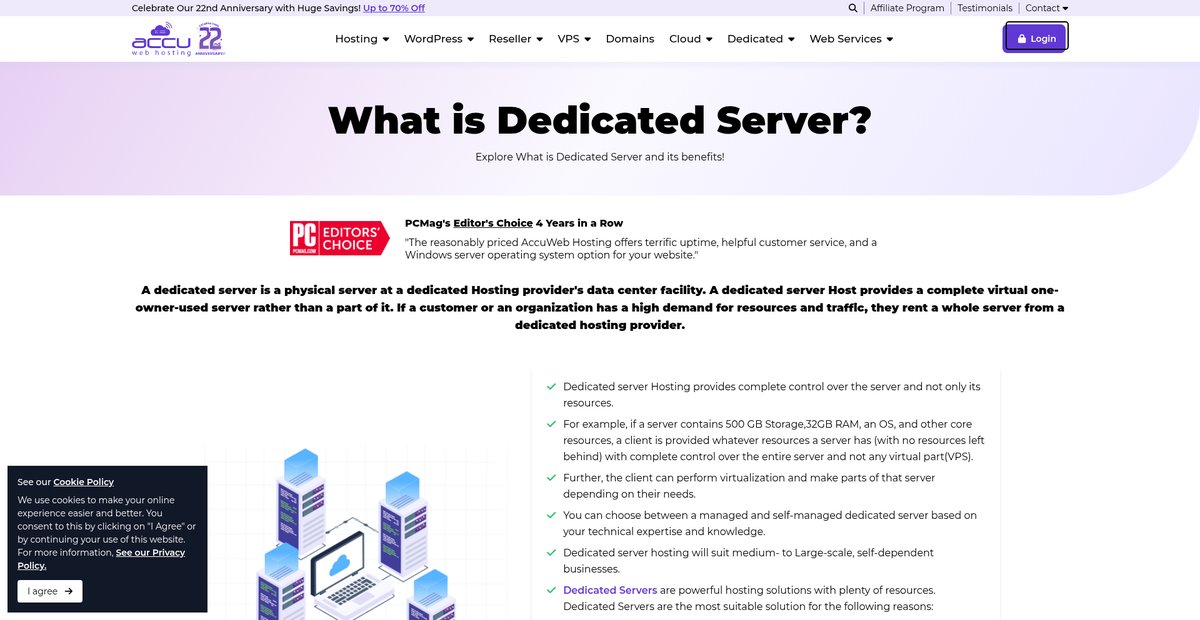
Dedicated web hosting refers to a hosting service where a customer rents an entire server exclusively for their use, providing complete control over the server's resources and configurations. This type of hosting is ideal for websites that experience high traffic, require heavy file transfers, or need enhanced security and stability for sensitive data. Dedicated servers are housed in advanced data centers and offer significant advantages, including the ability to install custom software and manage server resources according to specific needs. Overall, dedicated hosting is the most robust and expensive option available, suitable for mission-critical applications and corporate software. For more details, you can explore dedicated server plans and FAQs on AccuWeb Hosting's website.
7

What is Dedicated Web Hosting - HostingDecisions

hostingdecisions.com

Feb 26, 2023 Ryan Jacob

What is Dedicated Web Hosting - HostingDecisions Screenshot
Dedicated web hosting is a service where you lease an entire server from a hosting provider, allowing you full control over its resources without sharing with other users. This type of hosting is ideal for websites with high traffic and specific bandwidth needs, as it offers enhanced performance, security, and customization options. Unlike shared hosting, where multiple users share server resources, dedicated hosting ensures that you have exclusive access to the server's capabilities. It is particularly beneficial for sites that handle sensitive information, such as eCommerce platforms, due to its superior security features. Additionally, many providers offer managed dedicated servers, relieving users of technical management responsibilities. For more detailed insights, visit the full article at HostingDecisions.
8

What is a Dedicated Server?

us.ovhcloud.com

Jan 01, 2025
What is a Dedicated Server? Screenshot
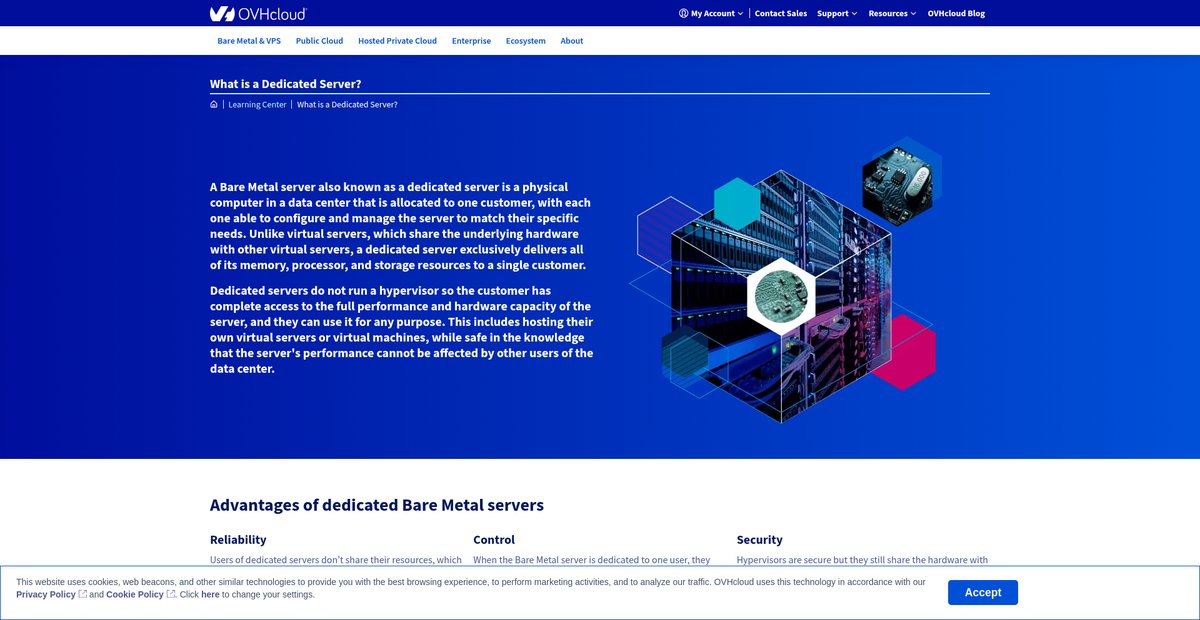
A dedicated web hosting service involves the use of a dedicated server, also known as a Bare Metal server, which is a physical computer allocated exclusively to one customer. This setup allows users to have complete control over the server's resources, including memory, processor, and storage, without sharing them with others.

Key advantages of dedicated web hosting include:

- **Reliability**: Since resources are not shared, performance is consistent and unaffected by other users.
- **Control**: Users can customize the server's hardware and software to meet specific needs.
- **Security**: Dedicated servers reduce vulnerabilities associated with shared environments, providing enhanced security.

However, dedicated hosting can be more expensive than virtual hosting due to the exclusive use of resources, and it requires a certain level of IT knowledge for configuration and management. Dedicated servers are ideal for businesses needing robust performance, security, and the ability to run complex applications or build private networks.
9

Dedicated hosting service

en.wikipedia.org

Apr 18, 2025 Contributors to Wikimedia projects
Dedicated hosting service Screenshot
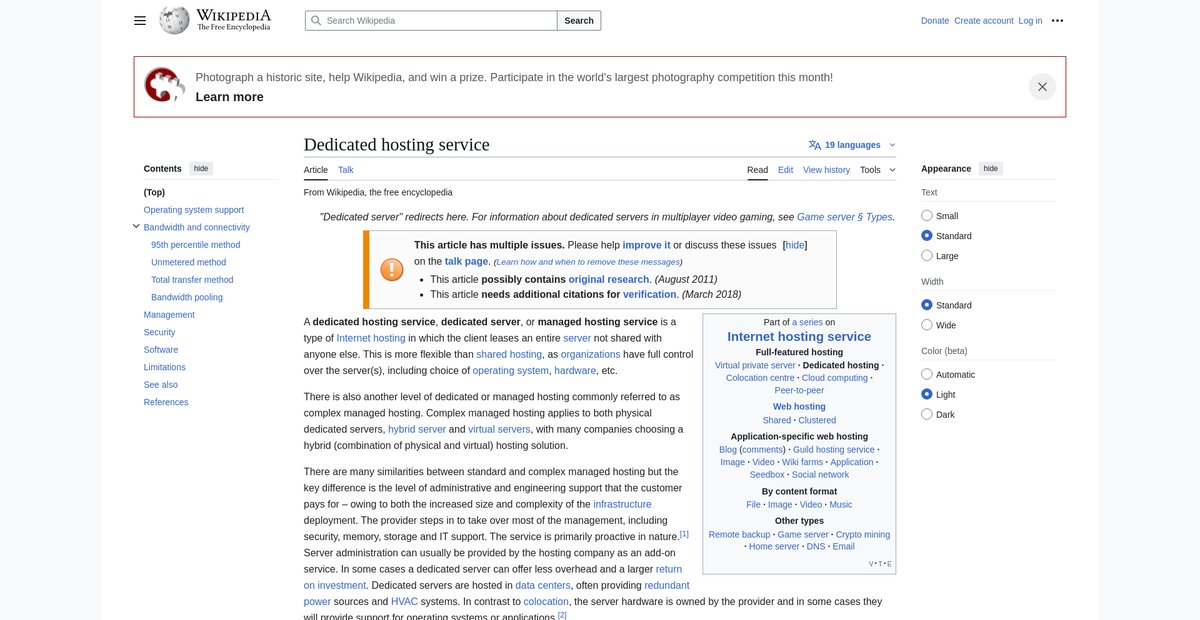
Dedicated web hosting is a type of internet hosting service where an entire server is allocated to a single client. This means that the client has full control over the server, including its resources, configuration, and security settings. Dedicated hosting is ideal for businesses or websites that require high performance, reliability, and customization, as it offers better performance compared to shared hosting solutions. Clients can choose the hardware specifications, operating system, and software applications to meet their specific needs. This hosting type is often used for large websites, applications, or services that experience high traffic or require significant processing power.
10

Dedicated Server vs VPS - Difference Between Hosting ...

aws.amazon.com

Apr 17, 2025
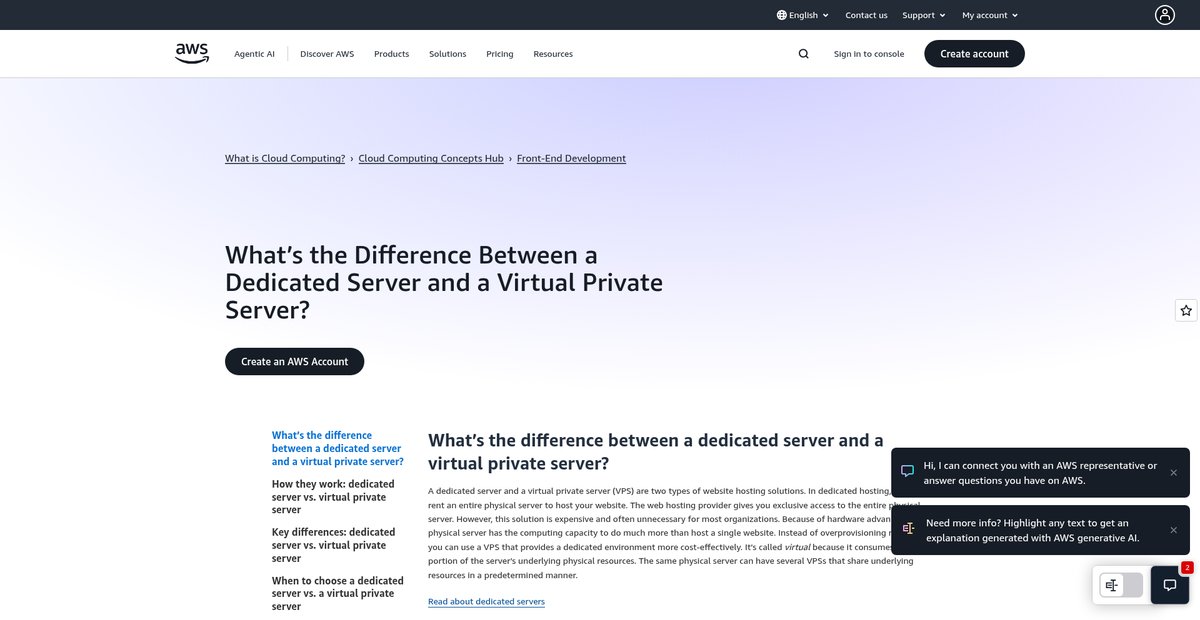
Dedicated Server vs VPS - Difference Between Hosting ... Screenshot
Dedicated web hosting refers to a hosting solution where an entire physical server is rented exclusively for your website or application. This means you have complete control over the server's resources, including RAM, storage, and network configurations, allowing for high performance and customization. Dedicated hosting is ideal for businesses with high traffic or specific resource needs, but it tends to be more expensive than other options, such as Virtual Private Servers (VPS). In contrast, a VPS shares a physical server's resources among multiple users, providing a more cost-effective solution while still offering a dedicated environment.