Top 10 Results
VPS vs Cloud hosting: Which option is better? - Server
www.ionos.com
Jul 04, 2023
Both hosting types utilize virtualization to segment resources from a physical server into virtual machines. However, VPS servers are independent segments, while cloud servers draw from a flexible pool of distributed resources. The choice between VPS and cloud hosting depends on a company's specific needs, IT capabilities, and budget, with each option presenting unique advantages and disadvantages in terms of data security, pricing, and scalability.
 Cloud vs. VPS Hosting: Understanding Pros, Cons and Key ...
www.cloudways.com
Jan 21, 2019
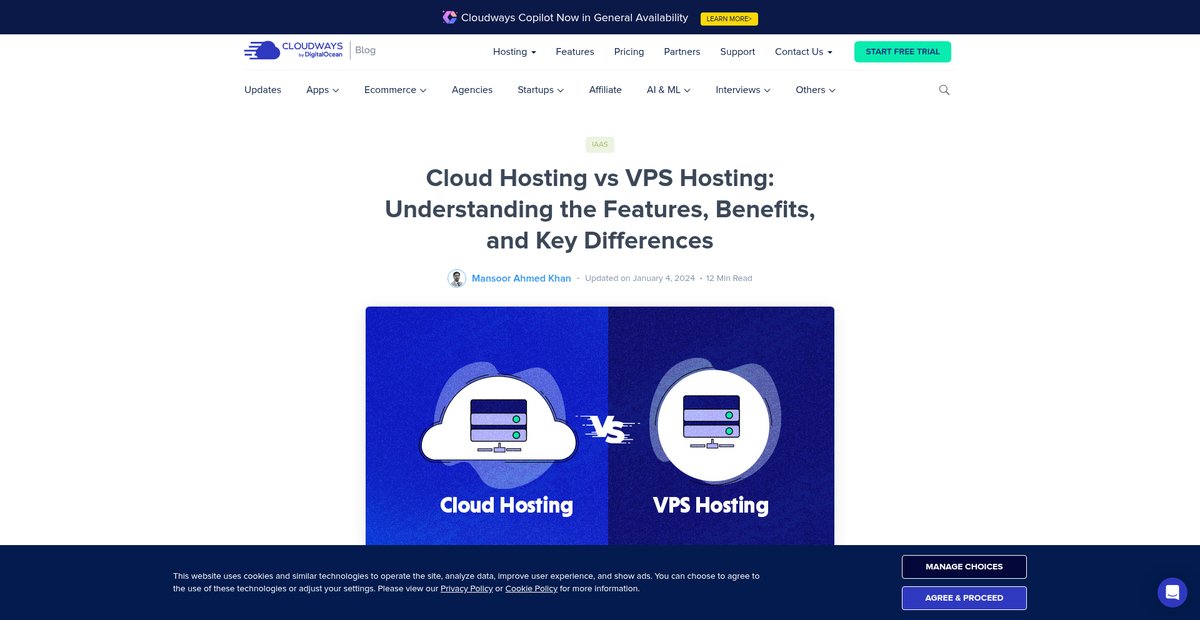
**Key Differences:**
- **Cloud Hosting** utilizes multiple interconnected servers, offering high scalability and reliability. It allows for easy adjustment of resources (CPU, RAM, storage) based on demand, making it suitable for websites with fluctuating traffic.
- **VPS Hosting**, on the other hand, provides a dedicated portion of a server, offering more control and customization. However, it requires more technical expertise to manage and is generally less scalable than cloud hosting.
**Benefits:**
- **Cloud Hosting** is ideal for businesses needing flexibility and high availability, as it can handle unpredictable workloads effectively.
- **VPS Hosting** is often more cost-effective and suitable for users who require specific configurations and have the technical skills to manage their server environment.
In summary, if you prioritize scalability and ease of management, Cloud Hosting is the better option. If you need more control and customization at a potentially lower cost, VPS Hosting may be more appropriate. Consider your specific needs, technical expertise, and budget when making your choice.
VPS vs. Cloud Hosting: Key Differences, Pros & Cons ...
www.siteground.com
Dec 18, 2024 Aleksandar Kolev
**VPS Hosting** offers dedicated resources on a single server, making it stable and cost-effective for websites with predictable traffic. It allows for root access and customization but has limitations in scalability, as resources are tied to one physical server. This can lead to downtime if the server encounters issues.
**Cloud Hosting**, on the other hand, utilizes a network of servers, providing greater scalability and flexibility. It can adjust resources in real-time, making it ideal for growing businesses or sites with fluctuating traffic. However, it may come at a higher cost compared to VPS.
In summary, choose VPS for stable, predictable traffic and cost-effectiveness, while cloud hosting is better for scalability and reliability.
 VPS vs Cloud Hosting 2025: Which One Boosts Website ...
www.bluehost.com
Jun 11, 2025 Sanjana Benny
In contrast, cloud hosting utilizes multiple virtual instances across a network of servers, allowing for instant scaling and better uptime. This flexibility makes it suitable for growing businesses that need to accommodate fluctuating traffic demands. While cloud hosting may not offer the same level of control as VPS, it excels in scalability and resource allocation.
Ultimately, the choice between VPS and cloud hosting depends on your specific needs: choose VPS for control and stability, or cloud hosting for flexibility and growth potential. Bluehost offers both options with scalable plans and expert support to help you make the right decision for your website.
 VPS vs Cloud Hosting Which is better: 5 important differences
n6cloud.com
Jun 05, 2025 N6 Cloud Inc.
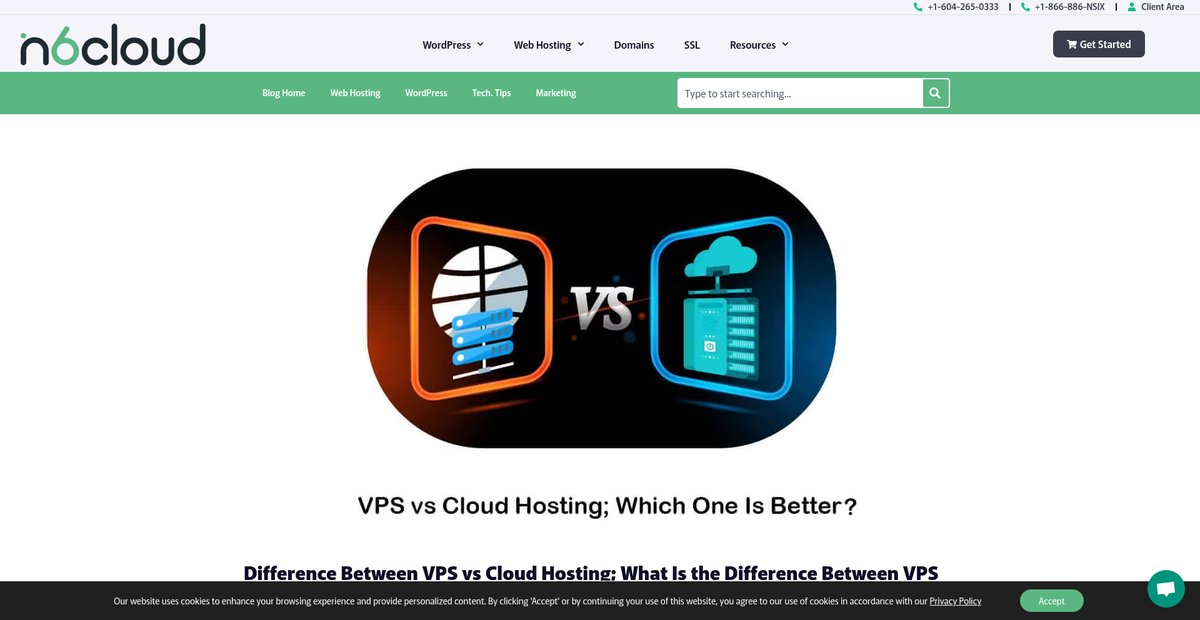
**Key Differences:**
1. **Definition**: VPS hosting involves a single physical server divided into multiple virtual servers, each with its own operating system and resources. In contrast, cloud hosting utilizes a network of virtual servers that draw resources from a larger pool, allowing for greater flexibility and scalability.
2. **Scalability**: Cloud hosting excels in scalability, enabling users to easily adjust resources like CPU and RAM based on demand, while VPS hosting has fixed resources that can be limiting.
3. **Customization**: VPS hosting offers extensive customization options, allowing users to install any software compatible with their operating system. Cloud hosting, while also customizable, may have some limitations based on the service provider.
4. **Performance and Reliability**: VPS can experience downtime if the physical server fails, whereas cloud hosting typically provides better reliability due to its distributed nature, ensuring that if one server goes down, others can take over.
5. **Cost**: VPS hosting often comes at a lower price point than cloud hosting, making it a more budget-friendly option for smaller websites, while cloud hosting may be more cost-effective for larger, resource-intensive applications.
In summary, the choice between VPS and cloud hosting depends on your specific needs, including budget, scalability requirements, and the level of control you desire over your hosting environment.
Cloud Hosting Vs. VPS - Which Comes Out on Top?
verpex.com
Jul 04, 2025 Julia Lozanov
**Key Differences:**
1. **Scalability**: Cloud hosting easily adapts to traffic spikes by utilizing multiple servers, while VPS is better suited for steady, high traffic but may struggle with sudden increases.
2. **Server Infrastructure**: Cloud hosting operates across several servers, enhancing resource efficiency, whereas VPS is based on a single physical server divided into virtual sections.
3. **Technical Knowledge**: Cloud hosting often requires less technical expertise due to managed services, while VPS users benefit from having some technical skills for server management.
**Similarities**:
- Both options offer improved performance over shared hosting and are similarly priced.
- Customer support is comparable, with both providing managed server maintenance.
**Conclusion**: For businesses that anticipate fluctuating traffic and prefer a hands-off approach, cloud hosting is recommended. In contrast, VPS hosting is ideal for those needing more control and security, as it isolates resources for individual users.
 VPS vs. Cloud Hosting: Key Differences, Pros & Cons Explained
www.siteground.com
Dec 18, 2024 Aleksandar Kolev
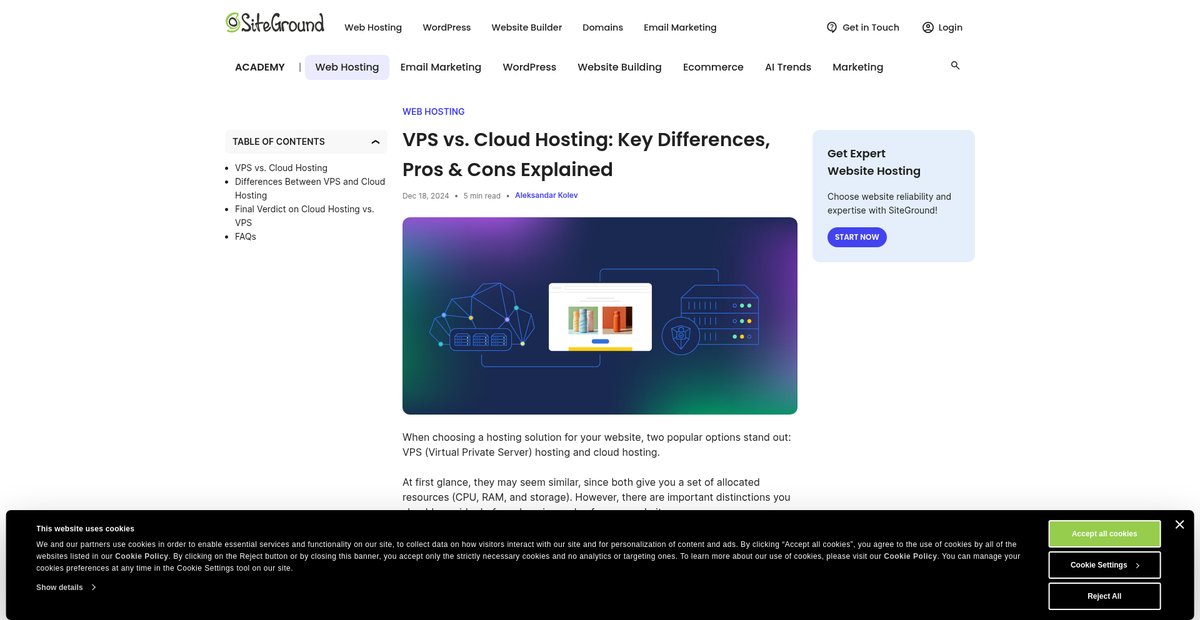
**VPS Hosting**:
- **Structure**: Divides a single physical server into multiple virtual servers, each with dedicated resources (CPU, RAM, storage).
- **Pros**: Cost-effective, offers root access for customization, and is suitable for websites with predictable traffic.
- **Cons**: Limited scalability tied to a single server, requires technical expertise for management, and risks downtime if the physical server fails.
- **Best For**: Smaller websites or those with stable traffic patterns.
**Cloud Hosting**:
- **Structure**: Utilizes a network of servers, allowing for real-time resource adjustments and enhanced reliability.
- **Pros**: Highly scalable and flexible, ideal for growing businesses or websites with fluctuating traffic.
- **Cons**: Can be more complex to manage and may incur higher costs depending on usage.
- **Best For**: Websites that experience variable traffic and require robust performance.
In summary, choose VPS hosting for stable, predictable traffic and cost-effectiveness, while cloud hosting is better for scalability and reliability in dynamic environments.
 Cloud vs VPS Hosting: Which Should You Choose?
cloudpages.cloud
Aug 14, 2024 Editorial Team
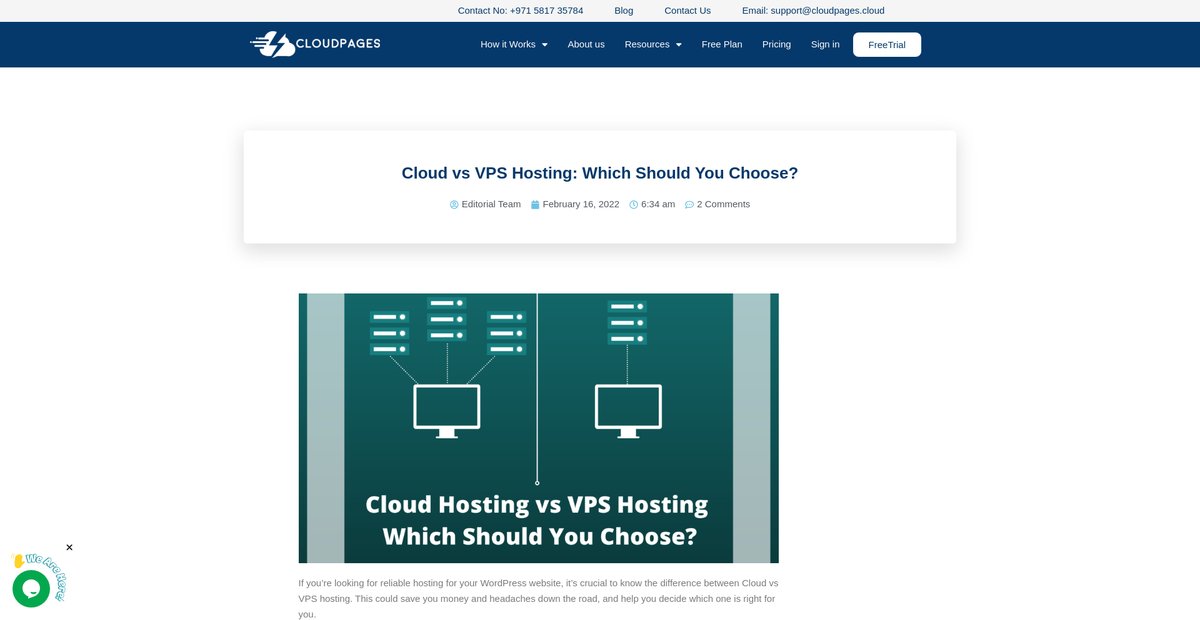
**Key Differences:**
1. **Virtualization**: Both Cloud and VPS Hosting utilize server virtualization, where a physical server is divided into multiple virtual servers. However, the management and resource allocation differ significantly.
2. **VPS Hosting**: This is a hybrid of shared and dedicated hosting. It offers dedicated resources (CPU, RAM, OS) for each virtual server, allowing for customization and root access. While VPS provides more control and stability than shared hosting, it is generally more expensive.
3. **Cloud Hosting**: Often marketed as a more flexible solution, cloud hosting can involve multiple servers working together, providing scalability and redundancy. It may not always offer the same level of dedicated resources as VPS, depending on the provider.
**Pros and Cons**:
- **VPS Hosting Advantages**: Complete root access, dedicated resources, and independence from other virtual servers.
- **VPS Hosting Disadvantages**: Higher cost compared to shared hosting, especially for managed services.
The article emphasizes that understanding these differences is crucial for making an informed decision based on your specific hosting needs, especially for platforms like WordPress.
Cloud Hosting vs. VPS (Virtual Private Servers)
www.rackspace.com
Jan 01, 2025
**Cloud Hosting** utilizes a network of virtual servers that draw resources from a centralized pool, offering scalability, flexibility, and high availability. It is ideal for businesses that require rapid resource allocation and can handle fluctuating traffic demands.
**VPS**, on the other hand, involves a single physical server that is divided into multiple virtual servers, each with dedicated resources. This option provides more control and customization compared to shared hosting, making it suitable for businesses with specific resource needs and predictable workloads.
In summary, choose Cloud Hosting for scalability and flexibility, while VPS is better for control and dedicated resources.
 Pros & Cons of Shared, Dedicated, VPS, & Cloud Web ...
www.hostpapa.com
Oct 18, 2023 Julia Keys
**VPS Hosting**:
- **Definition**: VPS hosting involves a single physical server divided into multiple virtual servers, each with dedicated resources.
- **Pros**:
- **Performance**: Offers better performance than shared hosting since resources are allocated specifically to each VPS.
- **Control**: Users have root access, allowing for greater customization and control over the server environment.
- **Cost-Effective**: Generally more affordable than dedicated hosting while still providing dedicated resources.
- **Cons**:
- **Management**: Requires more technical knowledge to manage and maintain compared to shared hosting.
- **Scalability**: While scalable, it may not match the flexibility of cloud hosting.
**Cloud Hosting**:
- **Definition**: Cloud hosting utilizes a network of virtual servers that pull resources from a centralized pool, allowing for dynamic resource allocation.
- **Pros**:
- **Scalability**: Easily scalable to accommodate traffic spikes or increased resource needs without downtime.
- **Reliability**: Offers high uptime and redundancy since data is stored across multiple servers.
- **Pay-as-You-Go**: Users typically pay only for the resources they use, making it cost-effective for varying workloads.
- **Cons**:
- **Complexity**: Can be more complex to set up and manage, especially
Screenshots Gallery