Top 10 Results
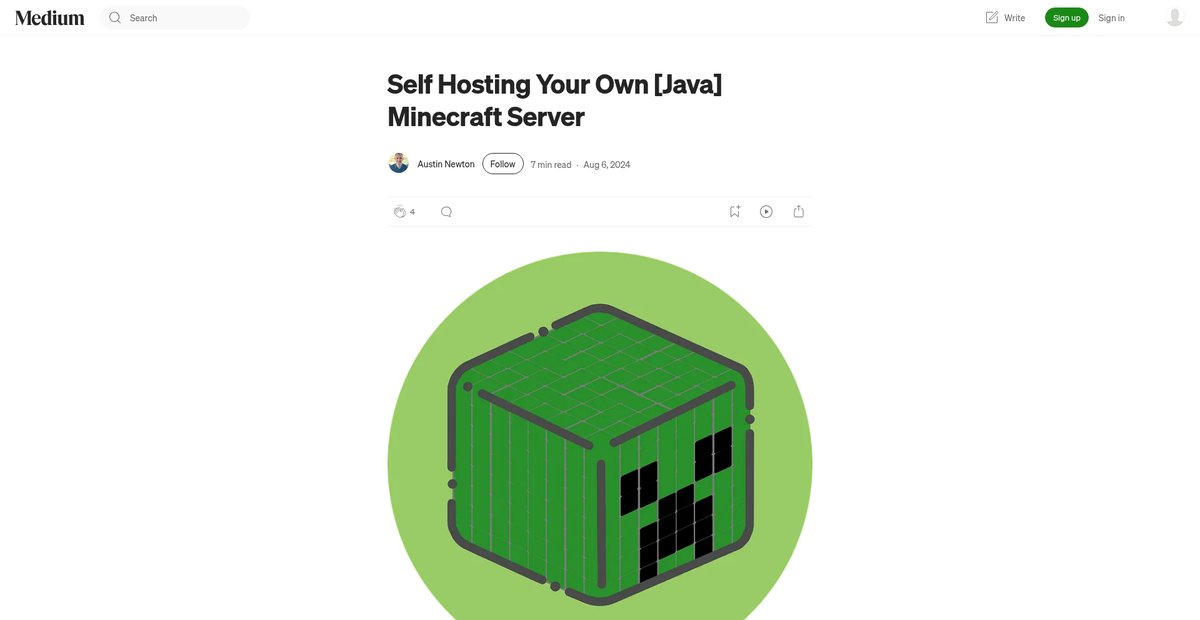
Self Hosting Your Own [Java] Minecraft Server
medium.com
Aug 14, 2024 Austin Newton
Key points include:
- **System Requirements**: A chart from the Minecraft Wiki helps determine the necessary specs for the server.
- **Installation Steps**: The guide walks through the installation of the JDK and other configurations needed to get the server running.
- **Resource Allocation**: It highlights the need to allocate additional resources for the operating system and other applications beyond just the Minecraft server.
This article is particularly useful for those looking to self-host a Minecraft server and provides practical insights for both beginners and those with some technical background.
 How To Self-Host a Minecraft Server Without Port ...
www.youtube.com
Apr 21, 2025 KasaiSora
How to Make and Self-Host a Powerful, Budget Minecraft ...
www.youtube.com
Aug 31, 2025 Computer Hardware Tips and Tutorials
 Is Selfhosting Minecraft Servers Actually Better?
www.youtube.com
Feb 07, 2025 CygnusMC
Minecraft hosting | DigitalOcean
www.digitalocean.com
Sep 13, 2023
Key features include:
- **One-Click Apps**: Simplifies the server setup process, making it accessible even for those with limited technical skills.
- **Global Data Centers**: Reduces latency and enhances network performance by allowing you to choose a server location close to your player base.
- **Scalability**: Easily adjust resources as player demand fluctuates, ensuring optimal performance at all times.
- **SSD Storage**: Provides fast data access and reduced load times, crucial for handling large Minecraft worlds.
To get started, you can create a Droplet on DigitalOcean and follow their tutorials for installing and configuring your Minecraft server. This setup allows you to focus on your game and community without worrying about server performance. For more information, visit DigitalOcean's Minecraft hosting page.
Vultr: High Performance SSD Cloud.
www.vultr.com
Jan 01, 2025
Key features include the latest Intel and AMD processors, hourly billing without long-term contracts, and a powerful API for easy server management. Vultr's user-friendly control panel allows for quick deployment and management of servers from any device. Additionally, users can take advantage of a $100 matched credit to get started. For more details, visit Vultr's Minecraft server page.
OVHcloud
us.ovhcloud.com
Jan 01, 2025
OVHcloud VPS for Minecraft
us.ovhcloud.com
Jan 01, 2025
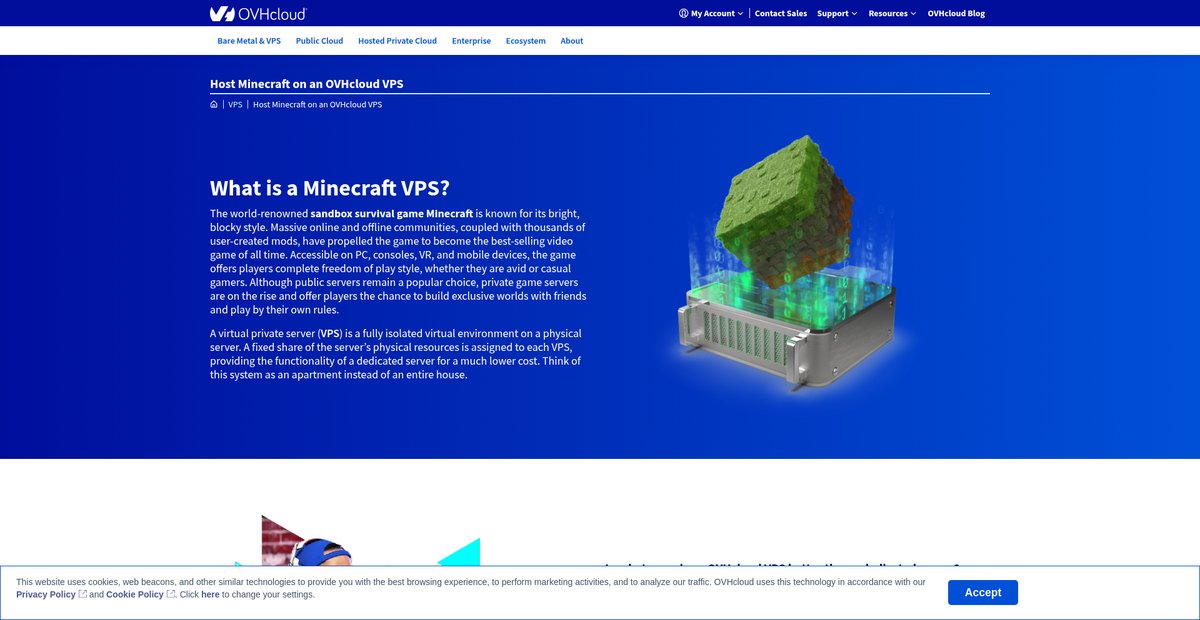
Key features include:
- **Resource Monitoring**: Users can track CPU, RAM, and network usage in real-time via the OVHcloud Control Panel, allowing for easy upgrades as community size and mod usage increase.
- **Location Optimization**: Choosing a data center close to your user base can significantly reduce latency and enhance performance.
- **Affordable Plans**: Options like VPS-2 and VPS-3 start at $6.75 and $12.75 per month, respectively, offering substantial resources such as up to 24 GB of RAM and unlimited traffic.
For those looking to expand or provide services, OVHcloud also offers dedicated game servers with enhanced features like anti-DDoS protection. Overall, OVHcloud's VPS is a practical choice for self-hosting a Minecraft server, balancing cost and performance effectively.
Minecraft Server Hosting & Game Servers | BisectHosting
www.bisecthosting.com
Jan 01, 2025
[Tutorial] The Ultimate Self Hosting Guide : r/admincraft
www.reddit.com
Feb 12, 2021 tacticalweebshit
Key sections include:
1. **Types of Hosting**:
- **Shared Hosting**: Easy and cheap but limited by resource overselling.
- **Dedicated Server**: Fast and customizable but expensive and requires technical knowledge.
- **Self Hosting**: Cheapest with maximum control, but requires constant PC operation and may face ISP limitations.
2. **Setup Steps**: The guide outlines essential steps such as port forwarding, troubleshooting port issues, and considerations for ISP filtering. It also suggests using tools like canyouseeme.org for troubleshooting and provides alternatives like tunneling for those unable to port forward.
3. **Requirements**: The server should run Java 11 or newer, have a high-speed internet connection, and a compatible CPU.
For detailed instructions and troubleshooting tips, refer to the full guide here.
Screenshots Gallery