Top 10 Results
 How does a dedicated server work? - Hosting
www.namecheap.com
Apr 09, 2024
Customers can manage access rights, open ports, and the services running on the server, making it ideal for high-traffic websites and applications that require optimal performance, security, and customization. Unlike shared or VPS hosting, where resources are shared among multiple users, a dedicated server ensures that all resources are dedicated to a single client, enhancing performance and security. This setup is particularly beneficial for businesses that need to run multiple services or handle sensitive data.
How Does a Dedicated Server Work?
gthost.com
Dec 20, 2024
Dedicated servers can be categorized into several types based on performance and specifications:
1. **Cheap Dedicated Servers (CDS)**: Basic functionality, suitable for minor performance issues, costing around $49/month.
2. **Standard Dedicated Servers (SDS)**: Better performance for small to medium businesses, priced between $89 to $109/month.
3. **Enterprise Dedicated Servers (EDS)**: Designed for large enterprises, offering high reliability and customization, costing between $399 to $899/month.
4. **High-Performance Dedicated Servers (HDS)**: Tailored for complex tasks like machine learning, often costing up to $100,000/month.
The operation of a dedicated server involves various components that work together to provide high-level performance and security, ensuring that sensitive data is protected and that users can manage their server environment effectively.
 What Is a Dedicated Server and How Does It Work?
www.bacloud.com
Jul 04, 2025
In dedicated server hosting, the server is housed in a professional data center, managed remotely by the user. After renting a dedicated server, you gain administrative access, allowing you to install software, configure settings, and manage the server as needed. Key aspects of how dedicated server hosting works include:
1. **Choosing Server Specs**: You select a server plan based on your requirements, including CPU, RAM, and storage capacity.
2. **Setting Up the Environment**: You have the freedom to choose the operating system (like Linux or Windows Server) and install necessary applications.
3. **Remote Management**: Management is conducted remotely using tools like SSH for Linux or remote desktop for Windows.
This dedicated setup typically results in faster website performance, improved security, and better SEO outcomes due to the absence of resource competition with other users.
What is a Dedicated Server? Everything You Need to Know
www.siteground.com
Apr 03, 2025 Nikola Knezhevich
In dedicated hosting, the client has full access to the server's hardware, software, and security settings, allowing for customized configurations tailored to specific requirements. This contrasts with shared hosting, where multiple clients share server resources, potentially leading to performance issues.
Key aspects of how dedicated server hosting works include:
1. **Resource Allocation**: The entire server's resources (CPU, RAM, storage) are dedicated to one user, ensuring consistent performance without competition from other users.
2. **Customization**: Clients can install any software or applications they need, configure security settings, and manage server resources according to their preferences.
3. **Management Options**: Dedicated servers can be managed by the client (unmanaged) or by the hosting provider (managed), depending on the client's expertise and needs.
4. **Scalability**: While dedicated servers provide robust performance, they can also be scaled up by upgrading hardware or adding additional servers as business needs grow.
Overall, dedicated server hosting is a powerful solution for businesses requiring high performance, security, and customization.
Dedicated hosting service
en.wikipedia.org
Apr 18, 2025 Contributors to Wikimedia projects
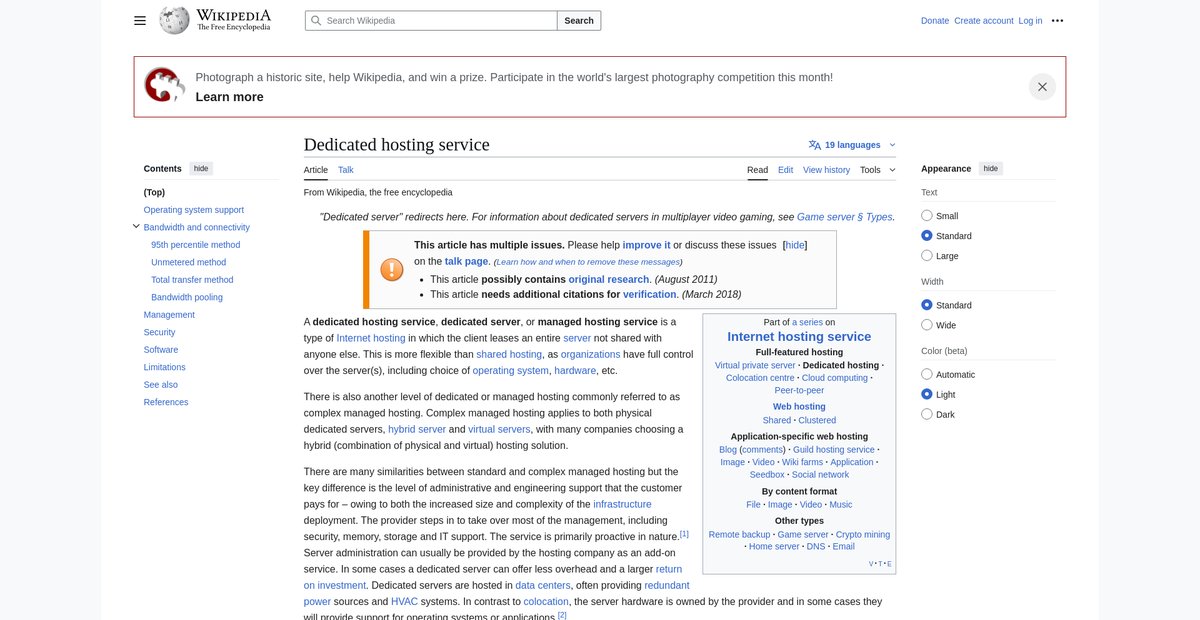
Clients can install any software, manage security settings, and optimize server performance according to their specific needs. This type of hosting is ideal for high-traffic websites, applications requiring substantial resources, or businesses needing robust security measures. Additionally, dedicated hosting often includes technical support from the hosting provider to assist with server management and maintenance.
For more detailed information, you can visit the full article on Wikipedia.
What is a Dedicated Server?
us.ovhcloud.com
Jan 01, 2025
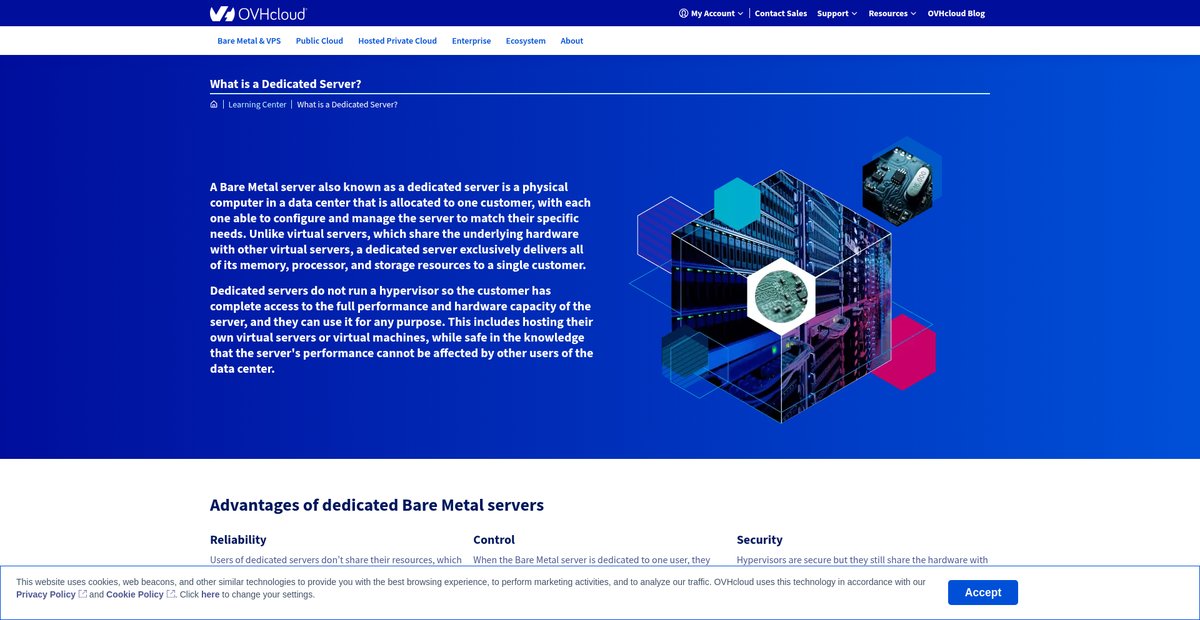
Key features of dedicated server hosting include:
1. **Full Control**: Users can customize the server's operating system, hardware specifications (like CPU, RAM, and storage), and software applications to meet specific needs.
2. **Reliability**: Since resources are not shared, dedicated servers offer consistent performance, unaffected by the traffic spikes that can impact virtual servers.
3. **Enhanced Security**: With no shared hardware or hypervisor layer, dedicated servers reduce vulnerabilities associated with multi-tenant environments.
However, dedicated server hosting comes with higher costs and requires technical expertise for setup and management. It is ideal for businesses needing robust performance, security, and the ability to run complex applications, such as private networks or database services.
 What is a Dedicated Server? Definition, Benefits, and Use Cases
www.liquidweb.com
Apr 05, 2025
In this setup, users have the flexibility to customize their server environment according to specific needs, including the choice of operating system, software, and hardware specifications. This level of control allows for tailored configurations that can enhance performance for resource-intensive applications or high-traffic websites.
Dedicated servers are particularly beneficial for businesses that require high reliability and security, as they minimize the risk of breaches associated with shared environments. They are ideal for various use cases, including application hosting, media streaming, and e-commerce, where performance and uptime are critical.
Overall, dedicated server hosting is a robust solution for organizations looking for enhanced performance, security, and customization in their web hosting services.
What is a Dedicated Server?
aws.amazon.com
Apr 17, 2025
In dedicated hosting, the server environment is isolated, making it ideal for mission-critical applications that require high availability and significant computational power. Users can customize server settings, monitor performance metrics, and implement tailored security measures, ensuring enhanced security and compliance with industry regulations. This setup is particularly beneficial for high-performance computing tasks, such as data analytics, simulations, and resource-intensive applications.
A Beginner's Guide to Dedicated Servers: Everything You ...
www.scaleway.com
Oct 18, 2024

When using a dedicated server, the user connects online to manage and configure the server remotely, having root access and administrative privileges. This means they can choose the operating system, install necessary software, and set optimal security configurations.
Key benefits of dedicated server hosting include:
1. **High Performance**: Resources are not shared, ensuring better performance and faster response times, which is crucial for resource-intensive applications and high-traffic websites.
2. **Enhanced Security**: Users have total control over security settings and access, reducing risks associated with sharing a server with others.
3. **Complete Control**: Users can customize hardware, software, and settings to meet specific requirements, optimizing performance for their applications.
Overall, dedicated server hosting is ideal for businesses needing reliable performance, security, and customization.
Can someone explain dedicated servers for me? : r/xboxone
www.reddit.com
Jun 23, 2013 Th3MufF1nU8
1. **Dynamic Server Allocation**: Servers can be dynamically assigned based on demand, allowing for flexibility in game hosting.
2. **No Host Advantage**: Unlike traditional hosting where one player may have a latency advantage, dedicated servers ensure a level playing field.
3. **Elimination of NAT Issues**: Players no longer need to worry about network address translation (NAT) problems, simplifying connections.
4. **Reduced Lag**: Dedicated servers minimize lag effects, enhancing the gaming experience, especially in fast-paced games.
5. **Higher Ping Tolerance**: Players with higher ping can still participate without significant issues.
6. **Larger Multiplayer Experiences**: Dedicated servers can support more players, enabling larger and more complex multiplayer games.
Overall, dedicated server hosting is considered a superior method for managing multiplayer games, providing a more stable and enjoyable experience for players.
Screenshots Gallery