Top 10 Results
 On-Premise vs. Cloud Servers: 2025 Guide | Scipio Tech
www.scipiotech.com
Oct 04, 2025
**On-Premise Servers** are physical servers located within a business's premises, requiring significant upfront investment and ongoing maintenance by in-house IT staff or managed service providers. They offer predictable long-term costs, full control over hardware, and potentially faster performance for local applications. However, they come with high initial costs and the need for continuous upgrades and maintenance.
**Cloud Servers**, on the other hand, are hosted by third-party providers and accessed via the internet. They require minimal upfront investment and offer scalability, making them attractive for small to mid-sized businesses. However, costs can accumulate over time due to monthly fees and potential hidden charges. Performance is dependent on internet connectivity, which can be a concern in areas with unreliable service.
For businesses in Tennessee, managed servers provide a hybrid solution, combining the benefits of on-premise control with reduced maintenance responsibilities. The choice between dedicated servers (on-premise) and cloud hosting ultimately depends on specific business needs, budget considerations, and performance requirements.
Dedicated Server vs. Cloud Hosting: What’s Best for Your Business in 2025?
dev.to
May 23, 2025 Sanoja
**Dedicated Server Hosting** offers exclusive access to a physical server, providing high performance, enhanced security, and full control over configurations. It's ideal for businesses with high traffic, resource-intensive applications, or strict regulatory requirements, ensuring maximum uptime and fast load speeds.
**Cloud Hosting**, on the other hand, utilizes virtual servers that draw resources from a network of physical servers. It excels in scalability and flexibility, allowing businesses to adjust resources based on real-time needs and only pay for what they use. This makes it a cost-effective choice for startups and those with variable traffic.
**Performance** tends to favor dedicated servers due to their dedicated resources, while cloud hosting can vary in performance based on shared environments.
**Cost** is another consideration; dedicated servers typically involve higher upfront costs, while cloud hosting offers a pay-as-you-go model, which can be more economical for smaller businesses but may become expensive at scale.
In summary, the choice between dedicated server and cloud hosting depends on your business's specific needs regarding performance, scalability, budget, and security.
 Cloud Server vs Dedicated Server Comparison
www.rackspace.com
Jan 01, 2025
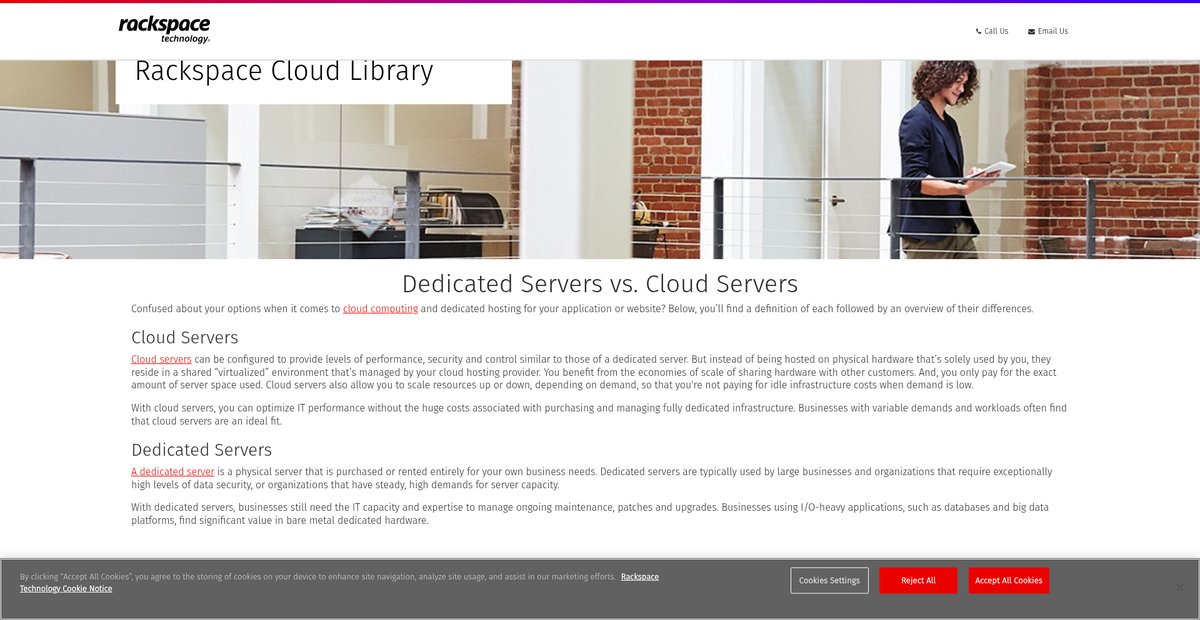
**Cloud Servers**:
- Operate in a shared, virtualized environment managed by a provider.
- Offer scalability, allowing businesses to adjust resources based on demand and only pay for what they use.
- Ideal for businesses with variable workloads, optimizing IT performance without the costs of dedicated infrastructure.
**Dedicated Servers**:
- A physical server exclusively for one business, suitable for organizations needing high data security and consistent server capacity.
- Require IT expertise for maintenance and management.
- Best for I/O-heavy applications like databases, providing significant value through dedicated hardware.
**Key Differences**:
- Cloud servers are multi-tenant, while dedicated servers are single-tenant, impacting security considerations.
- Cloud environments allow for quick resource scaling and management through community-driven APIs, whereas dedicated servers may involve longer vendor-driven processes.
- Both options can be deployed quickly and offer utility-based pricing, but cloud solutions often provide more cost-effective resource management.
For tailored advice on choosing between cloud and dedicated hosting, Rackspace offers support to assess business goals and IT requirements.
 Cloud vs. Dedicated Servers for Enterprises
www.liquidweb.com
Nov 27, 2024 Jake Fellows
Key distinctions include:
- **Infrastructure**: Cloud servers are virtual and distributed across multiple physical machines, while dedicated servers are single physical machines leased to one tenant.
- **Pricing**: Cloud servers typically operate on a pay-as-you-go model, making them more flexible and potentially cost-effective, whereas dedicated servers have a fixed monthly cost, which can be higher.
- **Performance**: Both options are reliable, but performance can vary based on the hosting provider chosen.
The article emphasizes that the decision between cloud and dedicated servers should be based on specific business requirements, including budget and hosting needs. It also notes the growing market for both types of servers, indicating their importance in modern business infrastructure.
For businesses considering their options, the guide outlines the advantages and disadvantages of each server type, ultimately suggesting that the best choice depends on individual circumstances.
 Comparison Between Cloud and Dedicated Server ...
www.cloudpanel.io
Jan 01, 2025 Shivendra Tiwari Technical Writer
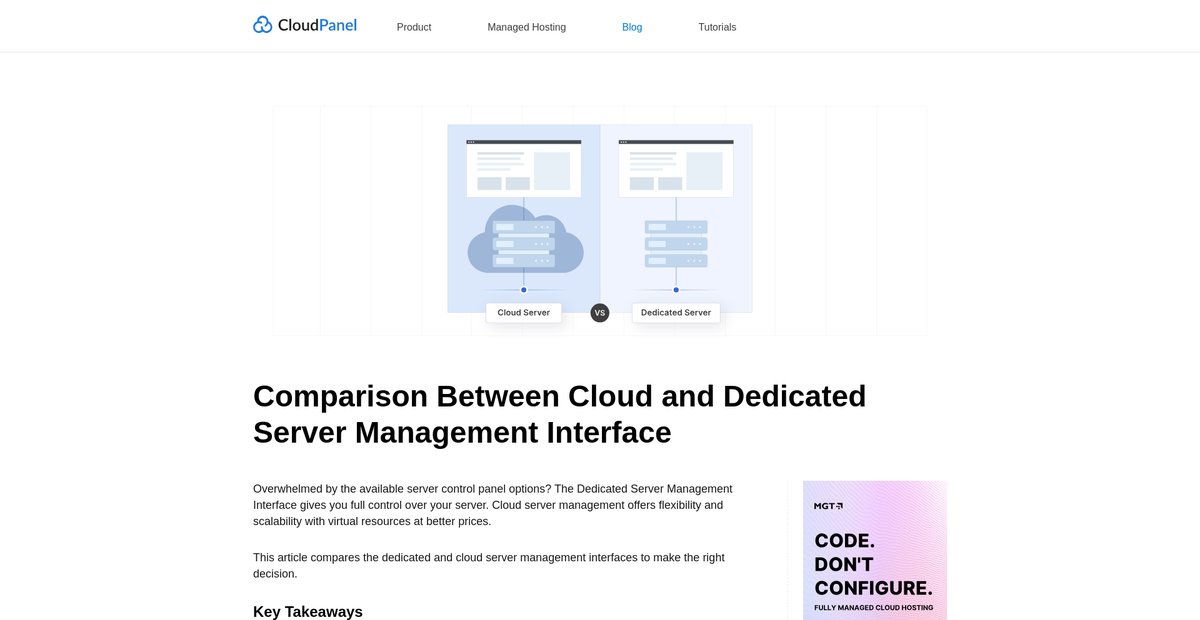
**Dedicated Servers**:
- Provide exclusive resources, leading to better performance and customization.
- Offer robust security due to isolation from other users.
- Ideal for businesses requiring high control over hardware and performance.
**Cloud Servers**:
- Feature dynamic resource scaling, allowing users to adjust CPU, RAM, and storage based on demand.
- More cost-effective with a pay-as-you-go model, making it suitable for businesses with fluctuating needs.
- Ensure high availability and quick deployment, with automated backups and disaster recovery options.
In summary, choose dedicated servers for performance and control, while cloud servers are better for flexibility and cost efficiency.
Dedicated vs. Cloud: How Much Does a Server Cost?
www.atlantech.net
Apr 02, 2024 Tom Collins
Key points include:
1. **Cost Comparison**: The average monthly cost for cloud servers is approximately $313.90, significantly lower than the $1,476.31 for dedicated servers. However, this figure does not capture the full picture of total cost of ownership (TCO).
2. **Factors Influencing Choice**: The decision between dedicated and cloud hosting should not be based solely on monthly costs. Other considerations include:
- **Server Set-Up Timeline**: How quickly you need the server operational.
- **Compliance Requirements**: Regulatory needs that may favor one option over the other.
- **Management and Support Needs**: The level of technical support required.
- **Workload Characteristics**: Input/output demands of your applications.
- **Demand Consistency**: Stability of your resource needs over time.
- **Anticipated Upgrades**: Future scalability and technology refresh considerations.
- **Capital vs. Operational Expenditure**: Financial implications of upfront vs. ongoing costs.
- **Talent-Related Costs**: Staffing needs for maintenance and management.
3. **Hidden Costs**: The article emphasizes the importance of understanding payment models and potential hidden costs associated with both hosting types.
In summary, while cloud hosting may appear cheaper on a
Cloud Server vs Dedicated Server: What's the Difference?
www.enterprisestorageforum.com
Sep 19, 2023 Avya Chaudhary
**Cloud Servers:**
- **Scalability:** Highly flexible, allowing for adjustments during traffic spikes.
- **Tenancy:** Multi-tenancy, meaning resources are shared among multiple users.
- **Cost:** Operates on a pay-as-you-go model with no upfront hardware costs.
- **Deployment:** Near-instant setup and easy migration.
- **Maintenance:** Managed by the provider, requiring no technical staff from the user.
- **Customization:** Limited hardware customization options.
**Dedicated Servers:**
- **Scalability:** Requires manual scaling, often necessitating downtime.
- **Tenancy:** Single tenancy, ensuring high performance under load.
- **Cost:** High initial investment with ongoing costs for unused resources.
- **Deployment:** Longer setup times due to hardware installation.
- **Maintenance:** Requires skilled personnel for upkeep and upgrades.
- **Customization:** Highly customizable, allowing control over hardware components.
In summary, cloud servers are ideal for businesses needing flexibility and lower initial costs, while dedicated servers offer better performance and security for those with specific resource needs and the capacity to manage them.
Dedicated Server Vs. Cloud Server
verpex.com
Jan 19, 2024 Julia Lozanov
**Dedicated Server:**
- Offers exclusive resources and space on a private server.
- Generally more expensive but provides powerful processing capabilities.
- Ideal for large enterprises with high traffic demands.
- Allows extensive customization and control over software and operating systems.
- Strong security features due to exclusive use.
**Cloud Server:**
- Utilizes multiple servers for flexible resource allocation and efficient performance.
- More cost-effective and easily scalable to handle traffic spikes.
- Managed cloud solutions offer strong security with minimal user effort.
- Generally less customizable than dedicated servers.
**Key Comparisons:**
- **Cost:** Dedicated servers are pricier; cloud servers are more affordable.
- **Scalability:** Cloud servers excel in scaling; dedicated servers require planning for adjustments.
- **Performance:** Both offer good performance, but cloud servers provide better resilience against failures.
- **Traffic Handling:** Dedicated servers can handle larger volumes of traffic, while cloud servers are flexible for spikes.
- **Security:** Dedicated servers offer robust security; managed cloud solutions provide strong security with less complexity.
In summary, dedicated servers are best for those needing high performance and customization, while cloud servers are ideal for flexibility and cost-effectiveness.
 Dedicated server vs cloud : r/hetzner
www.reddit.com
Nov 04, 2023
Dedicated Server vs VPS - Difference Between Hosting ...
aws.amazon.com
Apr 17, 2025
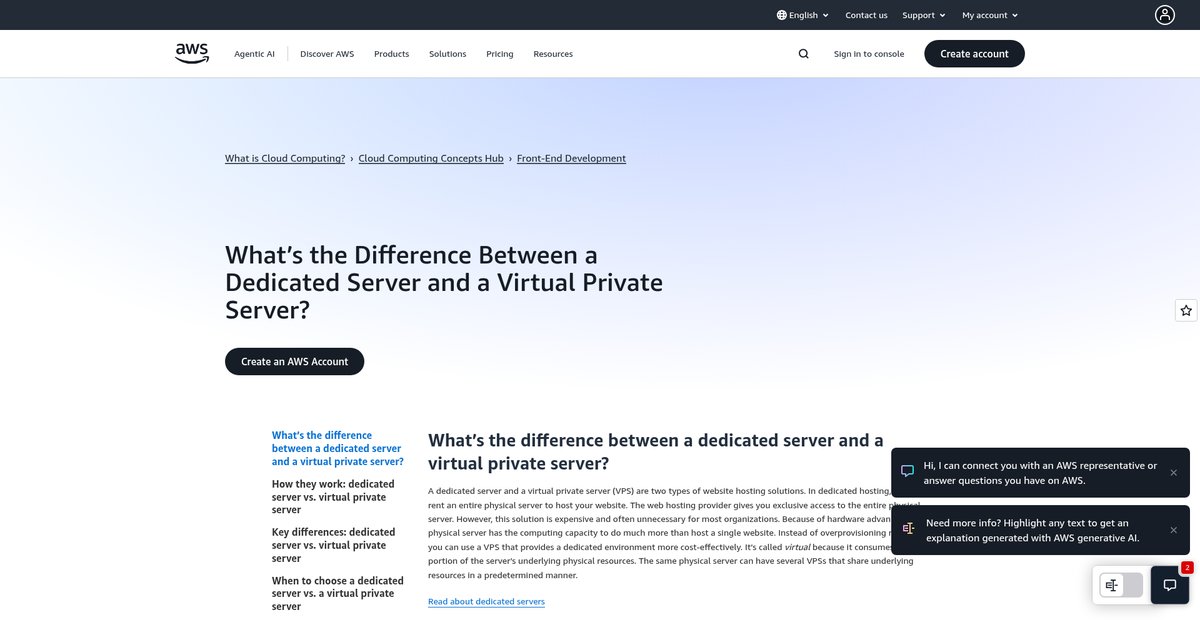
**Dedicated Server vs. Cloud Hosting: Key Differences**
- **Dedicated Server**: This is a physical server exclusively rented by a single user or organization. It provides complete control over the server's resources, configurations, and security. However, it is typically more expensive and may be overkill for smaller applications.
- **Cloud Hosting**: Unlike dedicated servers, cloud hosting utilizes a network of virtual servers that draw resources from a larger pool of physical servers. This allows for greater scalability, flexibility, and cost-effectiveness, as users only pay for the resources they consume. Cloud hosting can handle varying loads efficiently and is ideal for businesses that experience fluctuating traffic.
In summary, while dedicated servers offer exclusive access and control, cloud hosting provides a more scalable and flexible solution, making it suitable for dynamic workloads. If you're considering hosting options, evaluate your specific needs regarding control, scalability, and budget.
Screenshots Gallery